Water Extraction in Davis, CA
(888) 774-9605Get extractors to my floors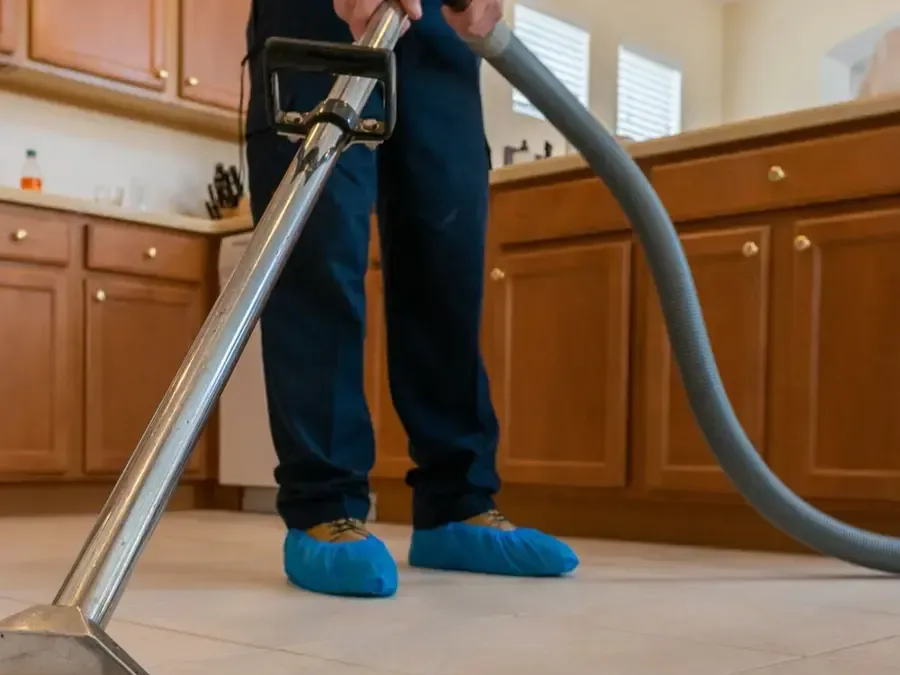
Standing water is the first problem on most water damage jobs in Davis, and it gets more expensive the longer it sits. Water wicks into baseboards, drywall and subfloors, and carpet pad holds it like a sponge. Extraction removes the bulk of that water mechanically, which is far faster than waiting for dehumidifiers to pull it from the air, and it shrinks the drying job that follows.
How a water extraction and removal job runs, step by step
Assess the water
The crew finds the source and the water category, then maps the wet areas with moisture meters and a thermal camera.
Extract the bulk
Truck mounted and portable units remove standing water, and wet pad or loose materials that cannot dry are taken out.
Start the drying
Air movers and dehumidifiers go onto wet floors and walls, and moisture readings are logged each day to track progress.
Confirm the result
Meters verify that materials reach their dry goal, and equipment leaves only after those readings are recorded for the file.
First steps for water extraction and removal right now
- Stop the source: Close the shutoff valve or turn off the appliance feeding the water. If water is still arriving, no pump can keep up, so this comes before any other move.
- Make the room safe: Switch off power to wet areas when the panel is dry and reachable, and stay out of rooms with water around outlets. Keep shoes off wet carpet to avoid spreading grit.
- Photograph the loss: Take wide and close photos of floors, baseboards and belongings before anything is moved, since adjusters rely on that first record of the damage.
- Call for extraction: Describe the water source, the rooms involved and how deep the water is, so the right extractors and a drying plan are loaded before the crew leaves.
Standing water in a room right now? Describe it and a local crew will explain what to do before extraction starts.
Ask for a pump outWhen standing water shows up locally
The area has cool wet winters, with about 20 inches of rain a year falling mostly from mid-November to mid-March. That is the season when a clogged gutter, an overflowing tub or a failed washer hose lets water into a house in neighborhoods such as Mace Ranch, Westwood and Covell Park. Summers are dry, so a flooded floor in July usually points to plumbing rather than weather.
The usual targets include:
- Hardwood and laminate floors after a plumbing leak
- Carpet and pad soaked by a washer, tub or toilet overflow
- Tile and vinyl floors where water has crept under the edges
- Laundry and garage floors that slope toward a drain
How the crew removes it
Crews start by identifying the water category and cutting power to wet circuits where needed. Truck mounted units handle large volumes, while portable extractors and weighted wands reach carpet, stairs and tight rooms. Pad that cannot be saved is lifted and removed.
Hard floors get squeegee passes and wet vacuums, and water is chased out from under cabinet toe kicks and along baseboards. Once the visible water is gone, moisture meters and a thermal camera show where it traveled, so the drying plan covers the walls and subfloor, not just the surface.
Extraction alone does not finish the job. Materials stay damp for days without airflow and dehumidification, so most jobs move straight into structural drying once the standing water is gone.
Before the crew gets there
Shut off the water source if it is still running, and switch off power to wet rooms only when the panel is dry and easy to reach. Lift small rugs, electronics and furniture onto dry surfaces, and photograph the floors and any stained walls before anything moves. Skip household vacuums on standing water. If the water came from a toilet or drain, treat it as contaminated and read about sewage backup cleanup before touching anything.
Why speed matters with standing water
Carpet pad and drywall begin to sag and swell once they stay wet, and water keeps traveling down walls into the subfloor. Pulling it out early often saves flooring that would otherwise be torn out. If the water came from a sewer or drain, stay out of the room and wait for protective gear. Waiting turns a drying job into a tear out job, which is the difference between a few fans and new flooring.
What does water extraction and removal cost in Davis, CA?
Extraction runs from $400 to $1,200 for a single room up to $3,500 to $8,000+ for a large or contaminated loss. Final pricing follows a walkthrough and moisture readings on site.
Single room
- One wet room
- Clean water source
- Extraction and readings
Several rooms
- Hallways and bedrooms wet
- Pad and trim removed
- Drying equipment set
Large or contaminated
- Gray or black water
- Whole floor affected
- Protective gear and containment
Ranges are typical, not a quote: water category, square footage, material class and how fast drying started move the number most. The water damage cost calculator gives a planning range for your own rooms.
Documenting extraction for a claim
Adjusters want to see how deep the water was and how fast it was removed. The crew photographs standing water before extraction, records the water category, logs moisture readings and lists removed pad and baseboard. Sudden losses such as a burst supply pipe are often covered while flood or long seepage may not be, so check your own policy and ask the adjuster; no coverage is promised.
The claim file the drying team builds holds a moisture map of every wet room, daily psychrometric drying logs, timestamped photos taken before any demolition, the water category and class of loss, and a line-item scope an adjuster can check. Sudden and accidental water from a pipe or appliance is treated differently from flood water, which most homeowners policies leave to separate flood coverage. Coverage depends on your own policy, so it is worth checking with your insurer before anything is decided. Keep copies of the photos, the readings and every invoice together, because a complete file is what keeps a water claim moving.
How a water loss is handled here, start to finish
Rapid local response
Dispatch runs 24/7 and active water is treated as urgent at any hour, across Davis and the neighboring valley cities.
IICRC S500 drying standard
Truck-mounted extraction, LGR dehumidifiers and air movers sized to the class of loss, with readings logged at the same points every day.
Claim-ready documentation
Moisture maps, psychrometric logs and timestamped photos taken before any wet material is cut out, so the adjuster sees the whole loss.
Valley water experts
River-city levees, winter atmospheric river storms, older plumbing and newer subdivisions all shape how each dry-out is planned.
Water extraction and removal across Davis and nearby communities
Crews reach Mace Ranch, Lake Alhambra Estates, Westwood, Stonegate, Willowbank, Aggie Village and Olive Drive across the city, with 24/7 dispatch for standing water. Rentals and owner occupied homes get the same equipment and the same drying standard.
The same service nearby: water extraction and removal in Sacramento, West Sacramento, Elk Grove.
Water damage restoration in Davis › Every town covered ›Related water damage services
Water Extraction and Removal questions in Davis, CA
How quickly does water extraction need to start?
As soon as the source is stopped. Water spreads into baseboards, drywall and subfloors quickly, and the sooner it is pulled out, the more flooring and cabinetry can be dried instead of replaced.
What equipment does water extraction use?
Truck mounted extractors handle large volumes, portable units and weighted wands reach carpet and stairs, and wet vacuums finish hard floors. Moisture meters and a thermal camera check what the water left behind. Crews pick the tool for the surface, so tile, laminate and carpet are never treated the same way.
Can water extraction help after the water has soaked in?
Yes. Extraction pulls free water and a good share of what carpet and pad are holding, and drying equipment then handles moisture inside the materials. The longer the wait, the more has soaked into drywall and subfloors.
Does water extraction work on carpet or only hard floors?
Both. Carpet and pad are extracted in place when they can be saved, and pad is usually removed when it cannot. Hard floors get squeegee passes, vacuums and airflow so water does not lift boards or tile edges.
How is water extraction different from structural drying?
Extraction removes liquid water, while structural drying removes moisture held inside framing, drywall and subfloors using airflow and dehumidifiers. Most jobs need both, in that order.
How much does water extraction cost in Davis?
Prices run from $400 to $1,200 for a single room, $1,200 to $3,500 for several rooms and $3,500 to $8,000+ for large or contaminated losses. A walkthrough sets the real number. Prices rise when water is gray or black, because protective gear, containment and disposal are added to the work.
Can I stay in the house during water extraction?
Often yes when the water is clean and power is safe, though noise from equipment is real. With sewage or gray water, the affected rooms should stay empty until cleanup and disinfection are finished.
Does water extraction include removing the wet carpet?
Not always. Carpet is extracted and dried in place when the water was clean and the pad is salvageable. When the water was gray or black, or the pad has stayed wet too long, the crew lifts and discards the pad, sometimes the carpet as well, then dries the subfloor underneath.
Get the water out and the floors drying
One call sets up extraction, drying equipment and the photo record your adjuster will ask for later.
(888) 774-9605Call the crew now