Water Extraction in Sacramento, CA
(888) 774-9605Water on the floor now? Tap here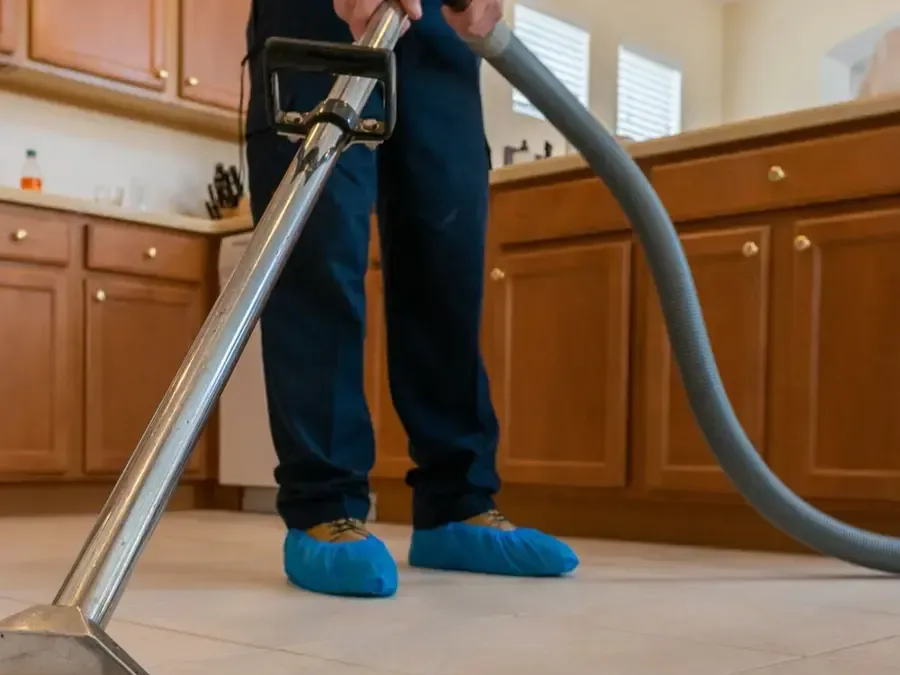
Water extraction is the step that decides how big a water loss becomes. Every hour standing water sits, it wicks higher into drywall, soaks deeper into pad and subfloor and swells wood trim and cabinets. In Sacramento the extraction crew treats any standing water as urgent, pulls as much as the equipment can lift, and only then starts thinking about drying. Once the floor is clear, structural drying takes over, and water that came from outside follows the flood water cleanup protocol instead.
How a water extraction and removal job runs, step by step
Source and safety check
The walkthrough tech confirms the water is stopped, checks for electrical risk and identifies the water category before any equipment goes in.
High-volume extraction
The extraction crew runs truck-mounted units across carpet and hard floors, then portable tools on stairs, closets and tight spots.
Moisture mapping
Thermal imaging and pinless meters trace water into walls, subfloor and cabinets, and every wet area is marked on the moisture map.
Hand-off to drying
Air movers and LGR dehumidifiers are set to the class of loss, and the first readings are logged right away so the dry-out is measured, not guessed.
First steps for water extraction and removal right now
- Stop the source: Close the fixture valve or the main if it is safe to reach, so the water on the floor stops growing while the extraction crew is on the way.
- Cut power to wet rooms: If water is near outlets, cords or a power strip, switch those circuits off at the panel only when the panel itself is dry and safe to reach.
- Lift what you can: Move rugs, papers, electronics and small furniture out of the water, and set foil or blocks under furniture legs that have to stay in place.
- Photograph the damage: Take wide and close photos of every wet room before anything is moved, because those pictures show the adjuster how far the water spread.
Water still spreading across the floor? Shut it off at the valve if you can, then call the Sacramento extraction crew.
Ask for an extraction crewWhat the extraction crew pulls out first
Truck-mounted units handle the volume: they lift water out of carpet, off hard floors and out of pad much faster than a wet vac or a fan ever could. Portable extractors and weighted extraction tools reach stairwells, upstairs rooms and spots a hose cannot. On carpet, pressing water out of the pad before deciding what to keep often saves the carpet itself.
- Standing water on tile, vinyl, hardwood and concrete
- Water held in carpet and pad
- Water trapped under floating laminate and engineered floors
- Water in garages, laundry rooms and utility closets
Where standing water collects in Sacramento homes
Slab-on-grade homes from the 1950s to the 1980s across South Natomas and the south side send water sideways under flooring and along wall bottoms. In the low ground of the Pocket, whose center sits slightly below sea level, and along the Garden Highway in Natomas, storm runoff that gets inside usually reaches garages and ground-floor rooms first.
Large homes near McKinley Park and the Fabulous Forties in East Sacramento add more finished space for water to cross before anyone notices it, so the tech who does the walkthrough checks every connected room, not just the wet one.
Reading the water before it comes out
Clean Category 1 water from a supply pipe is handled differently from gray water off a washer or Category 3 water from a backup or river flooding. The category decides the protective gear, what can be dried in place and what has to go, so the crew identifies the source before pumping.
The faster the bulk of the water comes out, the more trim, cabinets and flooring can stay. A careful extraction pass also leaves fewer gallons for the dehumidifiers to pull out of the air later, which shortens every day of drying that follows.
After extraction, thermal imaging and moisture meters show where water moved inside walls and under floors. That moisture map becomes the drying plan and the first page of the claim file.
Why a shop vac and fans fall short
A wet vac lifts the water you can see, but carpet pad, subfloor and the bottom of drywall keep holding far more than the surface shows. Fans alone push that moisture around the room and can raise the humidity everywhere else. Truck-mounted extraction removes the bulk of the water first, so the dehumidifiers and air movers that follow can finish the job in days instead of weeks.
What does water extraction and removal cost in Sacramento, CA?
Water extraction here typically runs $400 to $3,500 depending on how much floor is wet and what the water is. Square footage, carpet versus hard floors, the water category and how long the water sat set the number.
Single room
- One room or a hallway
- Clean water on the surface
- Truck-mounted extraction
Several rooms
- Carpet, pad and hard floors
- Water under flooring
- Moisture map for drying
Large or contaminated
- Most of the home wet
- Gray or Category 3 water
- Removal plus extraction
Ranges are typical, not a quote: water category, square footage, material class and how fast drying started move the number most. The water damage cost calculator gives a planning range for your own rooms.
Insurance for water extraction
When water comes from a sudden event such as a burst pipe or a failed appliance hose, emergency extraction is usually part of the mitigation an insurer expects a homeowner to start right away. Policies often ask homeowners to take reasonable steps to limit further damage, and fast extraction is the clearest example. The crew records the water source, the category and the area extracted so the mitigation bill and the moisture map tell the same story.
The claim file the drying team builds holds a moisture map of every wet room, daily psychrometric drying logs, timestamped photos taken before any demolition, the water category and class of loss, and a line-item scope an adjuster can check. Sudden and accidental water from a pipe or appliance is treated differently from flood water, which most homeowners policies leave to separate flood coverage. Coverage depends on your own policy, so it is worth checking with your insurer before anything is decided. Keep copies of the photos, the readings and every invoice together, because a complete file is what keeps a water claim moving.
How a water loss is handled here, start to finish
Rapid local response
Dispatch runs 24/7 and active water is treated as urgent at any hour, from Natomas and Point West down to the Pocket and Greenhaven.
IICRC S500 drying standard
Truck-mounted extraction, LGR dehumidifiers and air movers sized to the class of loss, with readings logged at the same points every day.
Claim-ready documentation
Moisture maps, psychrometric logs and timestamped photos taken before any wet material is cut out, so the adjuster sees the whole loss.
Valley water experts
River-bend lots, levee-side floodplain blocks, decades-old plumbing in mid-century subdivisions and winter storm leaks all shape the plan.
Water extraction and removal across Sacramento and nearby communities
The restoration team covers ZIP 95822, 95823, 95831 and 95832 and the neighborhoods around them, from the Pocket and Greenhaven along the river bend to Natomas, East Sacramento, Midtown and the established blocks of Upper Land Park and Elder Creek.
Nearby coverage reaches West Sacramento, Elk Grove, Davis, Citrus Heights, Rancho Cordova.
See every neighborhood and ZIP covered ›Related water damage services
Water Extraction and Removal questions in Sacramento, CA
How fast should standing water be extracted?
As soon as possible. Water keeps wicking into drywall, pad and subfloor, and damp materials can grow mold within 24 to 48 hours. Dispatch in Sacramento runs 24/7, so extraction can begin at any hour. Mention any sewage or flood water on the call so the right gear comes along.
Can I use a wet vac instead of water extraction?
A wet vac helps with a small spill, but it cannot pull water out of carpet pad and subfloor. Truck-mounted extraction removes far more water, which shortens drying and often saves the carpet. For anything bigger than a spill, a wet vac mostly spreads the water around.
Will my carpet be saved after water extraction?
Often, when the water was clean and extraction started fast. Pad usually comes out because it holds water like a sponge. Carpet touched by sewage or flood water is removed. Hardwood and laminate are judged room by room, using the moisture readings rather than looks.
What happens after the water is extracted?
The crew maps moisture with thermal imaging and meters, then sets air movers and LGR dehumidifiers. Readings are taken daily until materials reach a dry reference. The drying team adjusts the equipment as readings drop, so nothing runs longer than it needs to.
Does water extraction work on hardwood floors?
Yes. Surface water is extracted, and specialty drying mats can pull water out of the boards. Hardwood dries slowly, so readings decide when the floor can be refinished or left alone. Cupped boards often flatten again once the moisture in them comes down.
Is emergency water extraction covered by insurance?
Extraction after a sudden pipe or appliance failure is usually treated as mitigation. Flood water often falls under separate flood coverage. Coverage depends on your policy, so check with your own insurer. Keep the extraction invoice and the moisture map together, since adjusters ask for both.
How do I know the water reached inside the walls?
Thermal imaging shows cooler wet areas behind drywall, and moisture meters confirm them. Baseboards that swell or paint that bubbles are signs too. A musty smell near a wall a day or two later is another sign worth reporting.
Which Sacramento neighborhoods are covered for water extraction?
The whole city, from Natomas and Point West to Midtown, East Sacramento, Upper Land Park, the Pocket and Greenhaven, including ZIP 95822, 95823, 95831 and 95832. Nearby valley cities such as Elk Grove, Davis and Rancho Cordova are covered too.
Standing water at home? Get it pulled out now.
The extraction crew lifts the water, maps what soaked in and sets up drying the same visit, 24/7.
(888) 774-9605Request the pump-out, any hour