Flood Water Cleanup in Sacramento, CA
(888) 774-9605High water got inside? Tap to call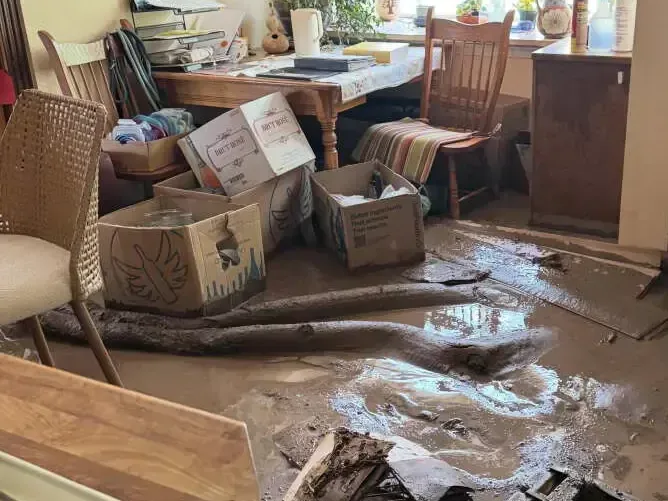
Flood water is never clean water. Whether it rose from a swollen creek, ran off a street in a winter storm or seeped up into a garage, it picked up soil, fuel, fertilizer and sewage on the way in. Sacramento flood cleanup therefore follows the Category 3 rules from the start: protective gear, containment, removal of porous materials and treatment before drying begins. The first step is the same high-volume water extraction used indoors, and any toilet or drain overflow is handled as sewage backup cleanup.
How a flood water cleanup job runs, step by step
Safety and pump-out
The response team checks for electrical and structural hazards, then pumps and extracts standing water and pushes out the mud and silt left behind.
Category 3 removal
Wet carpet, pad, drywall, insulation and particleboard below the waterline are removed and bagged, and the flood cut is set above the highest reading.
Clean and treat
Framing, concrete and hard surfaces are washed and treated with an EPA-registered antimicrobial, left for the label dwell time before drying begins.
Dry and verify
LGR dehumidifiers and air movers run until framing and subfloor read within 2 to 4 points of a dry reference, logged daily for the file.
First steps for flood water cleanup right now
- Wait for the all-clear: If water is still rising or an evacuation order is out, leave first and come back only when officials say it is safe to return.
- Keep power off: Do not switch on circuits in rooms that flooded until an electrician or the utility confirms it is safe, and keep away from wet panels.
- Protect yourself: Wear boots and gloves around flood water and mud, because it carries sewage and chemicals, and keep children and pets out of the rooms.
- Document everything: Photograph the waterline on walls, every damaged room and the contents before cleanup starts, then list what was damaged for the claim.
Flood water in the house? Leave the power off, keep children and pets out and call for a Sacramento flood cleanup crew.
Report rising water at homeA city built where two rivers meet
Sacramento grew at the confluence of the American and Sacramento rivers, about 25 feet above sea level. In the Great Flood of 1862 the city levee held floodwater inside town and much of the city stayed under water for about three months, which is why streets and buildings were later raised and the levees reinforced.
The low ground is still easy to find. North Natomas grew on the river floodplain from the mid-1990s, between the Garden Highway and Steelhead Creek, and the center of the Pocket bend sits slightly below sea level, where the Edwards levee break flooded the area in 1904.
What comes out and what can be dried
Anything porous that flood water touched comes out: carpet and pad, drywall and insulation to a flood cut above the waterline, particleboard cabinets and most upholstered furniture. Framing, concrete, tile and other solid materials are cleaned, treated with an EPA-registered antimicrobial at its stated dwell time and then dried.
- Mud and silt shoveled and washed out first
- Flood cuts made above the highest wet reading
- Wall cavities opened so framing can dry
- Contents sorted into clean, restore and discard
Drying after the cleanup
Once the structure is clean, the drying team sets LGR dehumidifiers and air movers sized to the class of loss. Readings are logged daily at marked points on studs, plates and subfloor, and nothing is closed up until those readings reach a dry reference, because sealing wet framing behind new drywall restarts the problem.
Contents get the same Category 3 thinking. Hard items such as dishes, tools and metal furniture can usually be cleaned and treated, while mattresses, upholstered pieces and soaked paper goods are photographed for the claim and set aside for disposal.
Treat every flood as contaminated
Flood water that looks clear still carries bacteria from sewers, lawns and streets. Drywall and insulation soak it up and cannot be cleaned, so they come out below and a little above the waterline. Wear gloves and boots, keep children and pets away from wet rooms, and wash hands after touching anything the water reached. A Category 3 protocol is the only safe starting point.
What does flood water cleanup cost in Sacramento, CA?
Flood water cleanup here typically runs $4,000 to $18,000, and a whole ground floor with deep water can run past $30,000. Water depth, square footage, how much drywall and flooring comes out and how long the water stood set the number.
Garage or one room
- Shallow water, small area
- Flood cuts and mud removal
- Antimicrobial and drying
Several rooms
- Carpet, pad and drywall out
- Contents sorted and moved
- Full Category 3 cleaning
Whole ground floor
- Deep or long-standing water
- Cabinets and floors removed
- Extended drying run
Ranges are typical, not a quote: water category, square footage, material class and how fast drying started move the number most. The water damage cost calculator gives a planning range for your own rooms.
Flood insurance and flood water cleanup
Standard homeowners policies usually exclude water that rises from outside, such as river, creek or surface water, and leave it to a separate flood policy, often written through the National Flood Insurance Program. Storm water that comes through a damaged roof can be treated differently from water that rises from the ground. The crew photographs the waterline, records how the water entered and logs every reading so the right policy can be applied.
The claim file the drying team builds holds a moisture map of every wet room, daily psychrometric drying logs, timestamped photos taken before any demolition, the water category and class of loss, and a line-item scope an adjuster can check. Sudden and accidental water from a pipe or appliance is treated differently from flood water, which most homeowners policies leave to separate flood coverage. Coverage depends on your own policy, so it is worth checking with your insurer before anything is decided. Keep copies of the photos, the readings and every invoice together, because a complete file is what keeps a water claim moving.
How a water loss is handled here, start to finish
Rapid local response
Dispatch runs 24/7 and active water is treated as urgent at any hour, from Natomas and Point West down to the Pocket and Greenhaven.
IICRC S500 drying standard
Truck-mounted extraction, LGR dehumidifiers and air movers sized to the class of loss, with readings logged at the same points every day.
Claim-ready documentation
Moisture maps, psychrometric logs and timestamped photos taken before any wet material is cut out, so the adjuster sees the whole loss.
Valley water experts
River-bend lots, levee-side floodplain blocks, decades-old plumbing in mid-century subdivisions and winter storm leaks all shape the plan.
Flood water cleanup across Sacramento and nearby communities
The restoration team covers ZIP 95822, 95823, 95831 and 95832 and the neighborhoods around them, from the Pocket and Greenhaven along the river bend to Natomas, East Sacramento, Midtown and the established blocks of Upper Land Park and Elder Creek.
Nearby coverage reaches West Sacramento, Elk Grove, Davis, Citrus Heights, Rancho Cordova.
See every neighborhood and ZIP covered ›Related water damage services
Flood Water Cleanup questions in Sacramento, CA
Is flood water cleanup different from a pipe leak cleanup?
Yes. Flood water is Category 3 from the start because it carries soil, sewage and chemicals. Porous materials it touched are removed instead of dried, and surfaces are treated with an EPA-registered antimicrobial. That is also why household cleaners are not enough on flood-soaked materials.
How high do flood cuts go after Sacramento flood water?
The crew measures with moisture meters and cuts drywall above the highest wet reading, usually a short distance above the visible waterline, so wet insulation and framing are fully exposed for drying. Cutting a little higher than the stain avoids leaving damp insulation hidden in the wall.
Can my carpet be saved after a flood?
No. Carpet and pad soaked by flood water are removed, because they hold contamination that cleaning cannot reach. Area rugs may sometimes be cleaned by a specialist, but wall-to-wall carpet comes out. Wood furniture and hard items can often be cleaned, treated and kept.
Does homeowners insurance cover flood water?
Usually not. Rising water from outside is typically covered only by a separate flood policy. Storm water entering through a damaged roof may be handled differently. Coverage depends on your policy, so check with your own insurer. Water entering through a storm-damaged roof is often handled under a different part of the policy.
My home is in Natomas. What should I know about flood risk?
North Natomas was built on the Sacramento River floodplain, bounded by the Garden Highway, the American River and Steelhead Creek. Look up your address on the FEMA flood map and confirm your coverage before the rainy season. Keep important papers and photos above the floor and know where the main water and gas shutoffs are.
How long does drying take after a flood?
After the cleanup and removal, most homes need about five to ten days of drying. Concrete and dense framing take longer, and equipment stays until readings reach a dry reference. Thick concrete, plaster and hardwood stay on the longer end of that range.
Is it safe to stay in the house during flood cleanup?
Rooms under active Category 3 cleanup are contained and should be kept clear, especially of children and pets. Many households stay in unaffected parts of the home once power is confirmed safe. Use only the rooms the crew has cleared and keep doors to the work area closed.
How fast should flood water cleanup start?
Right away once officials say it is safe to return. Water left standing soaks deeper into framing, and damp materials can start to grow mold within 24 to 48 hours. Every extra day of standing water means more material that has to come out.
River or storm water came inside? Get the cleanup started.
The response team pumps out the water, removes what cannot be saved, treats the structure and dries it to a verified reading.
(888) 774-9605Send a flood crew to the house