Commercial Water Damage in Sacramento, CA
(888) 774-9605Business flooded overnight? Tap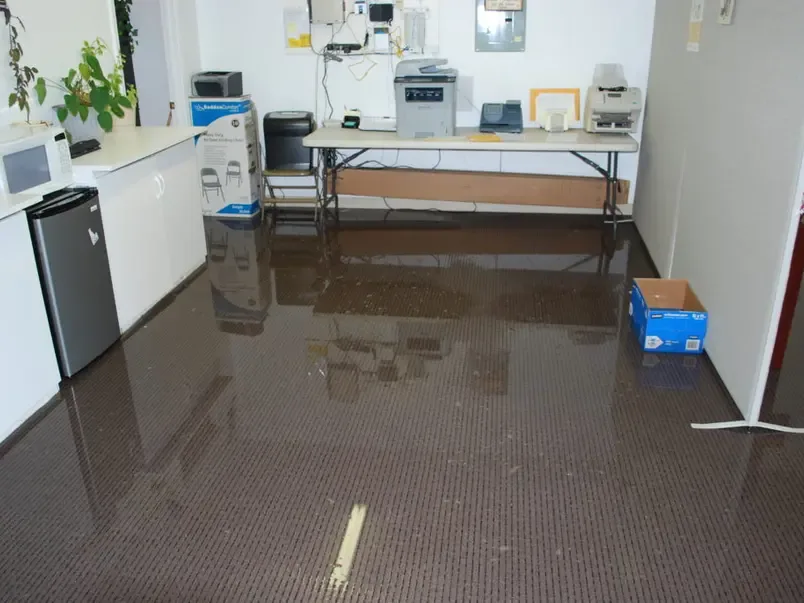
Commercial water damage costs money twice: once in damaged building materials and again in closed doors. Across Sacramento the commercial crew plans the extraction and drying around how the business runs, so that dry areas reopen first and wet areas are contained, monitored and returned to use in phases. Large spills start with water extraction, and the daily logs follow the same structural drying standard used in homes.
How a commercial water damage job runs, step by step
Assess and contain
The walkthrough tech maps the wet areas across the property, and containment is set so dry areas can stay open while the work goes on.
Extract by priority
The extraction crew pulls water from the areas the business needs first, then works through storage, back offices and common areas.
Phased drying plan
Air movers and LGR dehumidifiers are set area by area, with louder work scheduled after hours when the business needs that.
Daily reporting
Readings, equipment counts and photos are logged each day by area and shared with the owner or manager until every area is dry.
First steps for commercial water damage right now
- Stop the water: Close the main or the zone valve, and for a fire sprinkler leak call the sprinkler contractor and the fire alarm monitoring company before shutting it down.
- Protect people and power: Keep staff and customers away from wet floors and ceilings, and switch off circuits in wet areas only at a dry panel.
- Move critical items: Lift computers, files, inventory and records off the floor and away from the water, and note anything already damaged.
- Document for the claim: Photograph every wet area, damaged stock and the failed pipe or fixture, and record the time the water was found.
Water across the office or shop floor? Shut the valve, move critical items up and call the Sacramento commercial crew.
Ask about a phased dry-outBusiness districts and their water risks
Natomas holds office parks, retail and arenas and has long been one of the region's major employment centers, and South Natomas amended its community plan in 1982 to make room for millions of square feet of office parks. Downtown, museums cluster around Capitol Mall and the historic Old Sacramento Waterfront along the river, and the central grid has seen its own failures, such as the 14-inch main that broke near 15th and S streets in Richmond Grove and flooded several blocks.
- Fire sprinkler pipe and head failures
- Roof drains and flat-roof leaks over offices and retail
- Restroom, kitchen and break room supply failures
- Water from a tenant above in a multi-story building
Drying without shutting everything down
The crew sets containment around wet areas so the rest of the building stays usable, runs quiet equipment where people are working and moves louder extraction to evenings and weekends when needed. Commercial carpet tile, raised floors and wall bottoms behind cubicles and shelving are checked with thermal imaging so nothing is missed.
Records for owners, managers and adjusters
Each phase is logged: the moisture map, daily readings by area, equipment counts and photos before any demolition. That record lets an owner, a property manager and an adjuster see the same picture, and it shows tenants when each area is ready again.
Floors below get checked too. In a multi-story building, water from an upper suite often travels through ceilings and wall cavities into the tenant spaces beneath, so readings are taken on every affected level before any area is closed up.
Sprinkler leaks need the right calls first
A fire sprinkler leak puts a lot of water down fast, but shutting the system off affects fire protection for the building. Call the sprinkler contractor and the alarm monitoring company, follow the building's procedure and keep the area clear. The water side of the job, extraction and drying, can start as soon as the flow is under control.
What does commercial water damage cost in Sacramento, CA?
Commercial water damage here typically runs $3,000 to $25,000, and large multi-floor losses can run well past that. Square footage, the water category, how much carpet tile and drywall comes out, after-hours scheduling and the drying time set the number.
Single suite or shop
- One tenant space
- Carpet tile and wall bottoms
- Phased drying
Several suites
- Multiple tenants affected
- Containment and after hours
- Daily area reports
Multi-floor loss
- Water through several floors
- Ceilings and walls opened
- Large equipment set-up
Ranges are typical, not a quote: water category, square footage, material class and how fast drying started move the number most. The water damage cost calculator gives a planning range for your own rooms.
Insurance for commercial water damage
Commercial property policies, tenant policies and business income coverage can all be part of one water loss, and each one asks different questions. Adjusters look for the cause, the timeline, the areas affected and a drying record that explains the equipment and days. The commercial crew keeps those records by area and by day so owners, managers and tenants can each work with their own carrier.
The claim file the drying team builds holds a moisture map of every wet room, daily psychrometric drying logs, timestamped photos taken before any demolition, the water category and class of loss, and a line-item scope an adjuster can check. Sudden and accidental water from a pipe or appliance is treated differently from flood water, which most homeowners policies leave to separate flood coverage. Coverage depends on your own policy, so it is worth checking with your insurer before anything is decided. Keep copies of the photos, the readings and every invoice together, because a complete file is what keeps a water claim moving.
How a water loss is handled here, start to finish
Rapid local response
Dispatch runs 24/7 and active water is treated as urgent at any hour, from Natomas and Point West down to the Pocket and Greenhaven.
IICRC S500 drying standard
Truck-mounted extraction, LGR dehumidifiers and air movers sized to the class of loss, with readings logged at the same points every day.
Claim-ready documentation
Moisture maps, psychrometric logs and timestamped photos taken before any wet material is cut out, so the adjuster sees the whole loss.
Valley water experts
River-bend lots, levee-side floodplain blocks, decades-old plumbing in mid-century subdivisions and winter storm leaks all shape the plan.
Commercial water damage across Sacramento and nearby communities
The restoration team covers ZIP 95822, 95823, 95831 and 95832 and the neighborhoods around them, from the Pocket and Greenhaven along the river bend to Natomas, East Sacramento, Midtown and the established blocks of Upper Land Park and Elder Creek.
Nearby coverage reaches West Sacramento, Elk Grove, Davis, Citrus Heights, Rancho Cordova.
See every neighborhood and ZIP covered ›Related water damage services
Commercial Water Damage questions in Sacramento, CA
Can my business stay open during water damage drying?
Often, yes. Containment separates wet areas so dry areas can stay open, and louder work can be scheduled after hours. The plan depends on how much of the property is wet. Tenants are told which areas are open and which are contained each day.
How fast should commercial water damage be extracted?
As soon as possible. Water spreads under carpet tile, into wall bottoms and to floors below, and damp materials can grow mold within 24 to 48 hours. Inventory and records on the floor are moved first, before the water reaches more of them.
Do you work with property managers and adjusters?
The crew shares the moisture map, daily readings by area, equipment counts and photos, so owners, managers and adjusters all see the same record. One shared record keeps every party working from the same numbers.
What commercial properties are covered in Sacramento?
Offices, retail, restaurants, clinics, warehouses and apartment buildings, from Natomas office parks to downtown near Capitol Mall and the central grid. Apartment buildings and mixed-use properties are part of the commercial work too.
What should a business do about a fire sprinkler leak?
Call the sprinkler contractor and the alarm monitoring company, follow the building procedure for shutting the system and keep people clear. Extraction and drying start once the flow is controlled. The building's own procedure for impairments should be followed every time.
Is commercial water damage covered by insurance?
Commercial property, tenant and business income coverage can all apply, depending on the cause and the policies. Coverage depends on your policy, so check with your own insurer. Business income coverage can matter as much as the property damage itself.
Can commercial carpet tile be dried in place?
Sometimes, when the water was clean and extraction was fast. Tiles over wet subfloor are lifted so the floor can dry, and tiles touched by Category 3 water are removed. Raised floors and cable trays are opened and checked when water got beneath them.
How long does commercial drying take?
Many areas dry in three to five days. Large or dense losses take longer, and phased plans return dry areas to use as soon as their readings reach a dry reference. Dense materials and multi-floor losses take longer, and each area is signed off separately.
Water damage at your business? Keep the doors open.
The commercial crew extracts by priority, dries in phases and logs every area daily for owners, managers and adjusters.
(888) 774-9605Call the commercial drying team