Structural Drying in Sacramento, CA
(888) 774-9605Walls still damp? Tap for readings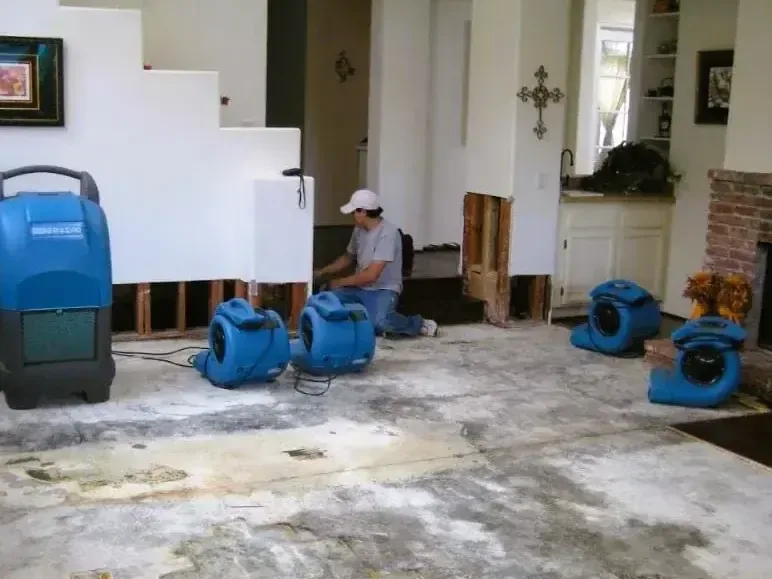
Structural drying is what separates a real dry-out from a wet room that only looks dry. Water that soaked into studs, sill plates, subfloor, plaster and concrete stays there long after the carpet feels dry, and closing it up behind new drywall or flooring is how damage comes back. Across Sacramento the drying team works to a measured goal, not a calendar. Drying starts after water extraction, and the drying time estimator shows a typical window for each class of loss.
How a structural drying and dehumidification job runs, step by step
Moisture map and reference
The walkthrough tech maps every wet material with meters and thermal imaging and picks a dry reference in an unaffected room.
Size the equipment
Air movers, LGR or desiccant dehumidifiers and mats are set to the class of loss, the room volume and the materials involved.
Log every day
Readings at marked points plus temperature and humidity are logged daily, and equipment is moved as wet areas shrink.
Confirm the goal
Equipment comes out only when every wet reading falls within 2 to 4 points of the dry reference, and the final log goes in the claim file.
First steps for structural drying and dehumidification right now
- Get the water out first: Structural drying starts after extraction, so standing water and soaked pad have to be removed before air movers and dehumidifiers can do their work.
- Keep doors and windows shut: Leave the drying area closed unless the drying team says otherwise, because outside air can be wetter than the air the dehumidifiers create.
- Leave equipment running: Do not switch off air movers or dehumidifiers to save power or cut noise, since every hour off adds time to the drying schedule.
- Mark changes: Tell the drying team about new stains, swelling, smells or water that reappears, so readings can be checked before the next visit.
Rooms still damp after a leak? Leave the equipment running and call the Sacramento drying team for readings.
Ask about drying readingsClass of loss sets the equipment
IICRC S500 sorts losses into classes by how much water the materials absorbed. Class 1 is a small area of low-porosity material, Class 2 a whole room with carpet and wall bottoms wet, Class 3 walls soaked high or water from above, and Class 4 dense materials like hardwood, plaster and concrete that need special drying.
- Air movers set to the room's evaporation load
- LGR dehumidifiers for most losses
- Desiccant dehumidifiers for dense, Class 4 materials
- Drying mats and wall cavity systems for floors and walls
Local materials that dry slowly
Concrete slabs under the 1950s to 1980s homes of South Natomas and the 1960s Greenhaven homes release water slowly after a slab or water heater leak. In the Pocket, homes sit on alluvium soil in a river bend whose center lies slightly below sea level, so a slab edge can stay damp after a leak. Hardwood floors in the large homes near McKinley Park and the Fabulous Forties need mats and patience rather than heat.
Cool, wet winter weeks slow evaporation, so the drying team leans on dehumidification to keep the air inside the work area dry.
How dry is dry
Every job gets a dry reference: an unaffected piece of the same material in the same home. Wet materials are read daily at marked points with pin and pinless meters, temperature and humidity are logged, and equipment comes out only when the wet readings fall within 2 to 4 points of that reference.
Equipment is moved as the wet area shrinks. When one room reaches its dry reference, its air movers come out and the dehumidifiers are refocused on the rooms that still read wet, which keeps the job as short as the materials allow.
Why a dry surface can still be a wet structure
Paint, carpet and the face of drywall dry quickly, so a room can look fine within a day. The bottom plate, the subfloor and the slab beneath can still hold enough water to swell new flooring, stain new paint and grow mold behind the wall. Readings at the same points every day are the only reliable proof that the structure itself is dry.
What does structural drying and dehumidification cost in Sacramento, CA?
Structural drying here typically runs $1,000 to $5,000 for equipment, monitoring and labor, depending on the class of loss. The number of rooms, the materials involved, desiccant needs and how many days the equipment runs set the number.
Class 1 or 2
- One or two rooms
- Air movers and LGR
- Three to five days
Class 3
- Walls soaked high
- Cavity drying
- Several rooms
Class 4
- Hardwood, plaster, slab
- Desiccant and mats
- Longer monitoring
Ranges are typical, not a quote: water category, square footage, material class and how fast drying started move the number most. The water damage cost calculator gives a planning range for your own rooms.
Insurance and the drying record
Adjusters review structural drying through the daily logs: how much equipment was set, why, how long it ran and what the readings showed each day. A drying record that follows IICRC S500 explains the equipment count and the number of days, which is what most questions on a water claim are about. The drying team keeps that record from the first reading to the last.
The claim file the drying team builds holds a moisture map of every wet room, daily psychrometric drying logs, timestamped photos taken before any demolition, the water category and class of loss, and a line-item scope an adjuster can check. Sudden and accidental water from a pipe or appliance is treated differently from flood water, which most homeowners policies leave to separate flood coverage. Coverage depends on your own policy, so it is worth checking with your insurer before anything is decided. Keep copies of the photos, the readings and every invoice together, because a complete file is what keeps a water claim moving.
How a water loss is handled here, start to finish
Rapid local response
Dispatch runs 24/7 and active water is treated as urgent at any hour, from Natomas and Point West down to the Pocket and Greenhaven.
IICRC S500 drying standard
Truck-mounted extraction, LGR dehumidifiers and air movers sized to the class of loss, with readings logged at the same points every day.
Claim-ready documentation
Moisture maps, psychrometric logs and timestamped photos taken before any wet material is cut out, so the adjuster sees the whole loss.
Valley water experts
River-bend lots, levee-side floodplain blocks, decades-old plumbing in mid-century subdivisions and winter storm leaks all shape the plan.
Structural drying and dehumidification across Sacramento and nearby communities
The restoration team covers ZIP 95822, 95823, 95831 and 95832 and the neighborhoods around them, from the Pocket and Greenhaven along the river bend to Natomas, East Sacramento, Midtown and the established blocks of Upper Land Park and Elder Creek.
Nearby coverage reaches West Sacramento, Elk Grove, Davis, Citrus Heights, Rancho Cordova.
See every neighborhood and ZIP covered ›Related water damage services
Structural Drying and Dehumidification questions in Sacramento, CA
What is structural drying?
Structural drying removes water from framing, subfloor, plaster and concrete, not just surfaces. Air movers, dehumidifiers and mats run until the materials read close to a dry reference. Surface feel is not a test, because the inside of the material dries last.
How do you know when the structure is dry?
Wet materials are read daily at marked points and compared with an unaffected piece of the same material. Equipment comes out when readings fall within 2 to 4 points of that reference. The reference comes from the same material in an unaffected part of the home.
Why is the equipment so loud and does it have to run all night?
Air movers and dehumidifiers run around the clock because drying is continuous. Switching them off adds days to the job, so the team places them to limit disruption. Equipment is placed to keep walkways and exits clear while it runs.
What is the difference between LGR and desiccant dehumidifiers?
LGR units handle most losses efficiently. Desiccant units pull water out of very dense materials like hardwood, plaster and concrete, and work well in cooler conditions. The drying team picks the unit that fits the material and the conditions on site.
How long does structural drying take in Sacramento?
A Class 1 or 2 loss usually dries in three to five days. Class 3 and 4 losses with soaked walls, hardwood or concrete take longer, and the readings decide. Hardwood and slabs sit on the longer end, and readings decide the finish.
Can I turn on my air conditioning during drying?
Ask the drying team first. The equipment is set for specific conditions, and changes to temperature or airflow can speed up or slow down the dry-out. Opening windows on a humid or rainy day can also slow the drying down.
Is structural drying covered by insurance?
When the water damage is covered, the mitigation and drying are usually part of the claim. Daily logs explain the equipment and days. Coverage depends on your policy, so check with your own insurer. Logs that show the class of loss and the equipment explain the bill line by line.
What happens if walls are closed up before they are dry?
Trapped moisture swells materials, stains finishes and can lead to mold within 24 to 48 hours of staying damp. Verified drying prevents a second round of repairs. Waiting a few extra days for dry readings costs far less than a second tear-out.
Walls still wet behind the paint? Get them measured.
The drying team sizes equipment to the class of loss and logs readings daily until the structure is truly dry.
(888) 774-9605Get the dehumidifiers set up