Water Heater Leak Cleanup in Sacramento, CA
(888) 774-9605Tank leaking on the floor? Tap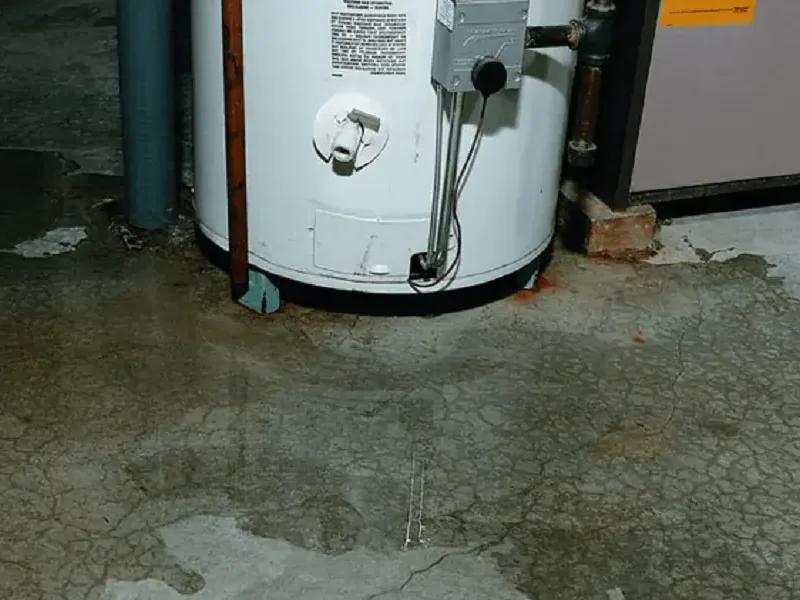
A water heater holds a full tank of water under pressure and refills itself as fast as it drains. When the tank rusts through, a relief valve opens or a supply fitting lets go, that water spreads across the garage slab or under the closet wall into the next room. In Sacramento the drying team treats a heater leak as two jobs: stop the water and dry everything it reached, including the parts you cannot see. Standing water comes out with water extraction first, and a heater on a slab sometimes hides a slab leak as well.
How a water heater leak cleanup job runs, step by step
Find the spread
The walkthrough tech checks the slab, the shared wall, nearby carpet and the ceiling below an attic heater with thermal imaging and meters.
Extract the water
The extraction crew pulls standing water off the slab and out of any carpet and pad, then removes wet baseboard where readings call for it.
Open and dry
Wet drywall at the bottom of walls is cut above the wet line, cavities are opened and LGR dehumidifiers and air movers are set for the class of loss.
Verify dry
Readings are logged daily on drywall, framing and subfloor, and equipment stays until every point reaches a dry reference.
First steps for water heater leak cleanup right now
- Shut off the cold supply: Close the cold water valve on top of the heater, or the main if that valve will not turn, so the tank stops refilling and feeding the leak.
- Turn off the heat source: Switch off the breaker for an electric heater or set a gas heater to off or pilot, following the label on the unit, before water reaches it.
- Move stored items: Lift boxes, tools and anything stored on the garage or closet floor out of the water, and keep cardboard away from the wet slab.
- Photograph the tank: Take photos of the tank, the label, the leak point and every wet wall and floor, which helps both the plumber and the adjuster.
Heater still dripping into the garage? Close the cold supply valve and call the Sacramento drying team.
Ask about heater waterWhy tanks fail in local homes
A tank-style heater has a limited service life, and many homes across the area are now on their second or third. Subdivisions in South Natomas date from the 1950s to the 1980s, Greenhaven homes from the 1960s and the Pocket from the 1980s and early 1990s, so heaters, their connectors and the drain pans under them have seen years of use.
- Rust at the bottom seam of an older tank
- A temperature and pressure relief valve that opens or drips
- Corroded supply connectors on top of the tank
- A missing or cracked drain pan under a closet or attic heater
Where the water goes
In a garage, water runs across the slab and wicks into the bottom of the shared wall with the house, then into stored boxes and cabinets. A heater in a hall closet sends water under the wall into carpet, pad and the baseboards of nearby rooms. An attic heater sends it down through the ceiling. Thermal imaging and meters show the real spread before anything is removed.
Drying the garage and the rooms beside it
The extraction crew pulls standing water from the slab and any carpet it reached. Wet drywall at the bottom of the shared wall is cut where readings call for it, wet boxes are moved out, and LGR dehumidifiers and air movers run until every reading reaches a dry reference.
Garage slabs dry faster than most floors once the water is off them, but the bottom of the shared wall and any carpet on the far side take longer. Readings on both sides of that wall decide when the job is done, not how the garage floor looks.
Do not wait for the next drip
A heater that is weeping rust at the bottom seam or dripping from its relief valve is close to failing. When the tank finally lets go, it can release its full volume and keep refilling until the supply valve is closed. Know where that cold supply valve is, keep stored boxes off the floor around the heater and check the drain pan every few months.
What does water heater leak cleanup cost in Sacramento, CA?
Water heater leak cleanup here typically runs $900 to $4,500 for extraction and drying, separate from replacing the heater. How far the water spread, whether carpet or drywall in the next room got wet and how long the leak ran set the number.
Garage slab only
- Water on concrete
- Wall bottoms checked
- Short drying run
Into the next room
- Carpet and pad wet
- Baseboard and drywall cuts
- Full drying set-up
Attic or long leak
- Ceiling below wet
- Insulation removed
- Longer drying run
Ranges are typical, not a quote: water category, square footage, material class and how fast drying started move the number most. The water damage cost calculator gives a planning range for your own rooms.
Insurance for water heater leak damage
When a tank or fitting fails suddenly, most homeowners policies cover the resulting water damage after the deductible, but not the heater itself. A tank that leaked slowly for months can be treated as wear and tear. The drying team records the date the water was found, the failure point and how far the water reached, which helps the adjuster see a sudden failure.
The claim file the drying team builds holds a moisture map of every wet room, daily psychrometric drying logs, timestamped photos taken before any demolition, the water category and class of loss, and a line-item scope an adjuster can check. Sudden and accidental water from a pipe or appliance is treated differently from flood water, which most homeowners policies leave to separate flood coverage. Coverage depends on your own policy, so it is worth checking with your insurer before anything is decided. Keep copies of the photos, the readings and every invoice together, because a complete file is what keeps a water claim moving.
How a water loss is handled here, start to finish
Rapid local response
Dispatch runs 24/7 and active water is treated as urgent at any hour, from Natomas and Point West down to the Pocket and Greenhaven.
IICRC S500 drying standard
Truck-mounted extraction, LGR dehumidifiers and air movers sized to the class of loss, with readings logged at the same points every day.
Claim-ready documentation
Moisture maps, psychrometric logs and timestamped photos taken before any wet material is cut out, so the adjuster sees the whole loss.
Valley water experts
River-bend lots, levee-side floodplain blocks, decades-old plumbing in mid-century subdivisions and winter storm leaks all shape the plan.
Water heater leak cleanup across Sacramento and nearby communities
The restoration team covers ZIP 95822, 95823, 95831 and 95832 and the neighborhoods around them, from the Pocket and Greenhaven along the river bend to Natomas, East Sacramento, Midtown and the established blocks of Upper Land Park and Elder Creek.
Nearby coverage reaches West Sacramento, Elk Grove, Davis, Citrus Heights, Rancho Cordova.
See every neighborhood and ZIP covered ›Related water damage services
Water Heater Leak Cleanup questions in Sacramento, CA
What should I do first when my water heater leaks?
Close the cold water supply valve on top of the heater, or the main if that valve sticks. Turn off the power or gas following the label, then move stored items out of the water. If the relief valve is spraying hot water, keep clear and let it drain into the pan or floor drain.
Can a leaking water heater damage rooms next to the garage?
Yes. Water runs across the slab and wicks into the bottom of the shared wall, then into carpet and baseboards on the other side. Meters show how far it went. Baseboards and carpet tack strip on the far side of that wall are checked as well.
Does homeowners insurance cover a water heater leak?
Sudden water damage from a failed tank is usually covered after the deductible, while the heater replacement is not. A slow leak can be treated as wear and tear. Coverage depends on your policy, so check with your own insurer. Keep the heater's model label photo and the plumber's report with the claim.
How long does drying take after a water heater leak?
Most garage and closet losses dry in three to five days. Water that reached carpet, drywall or a ceiling below an attic heater takes longer, and readings decide when it is done. Equipment stays until the wall bottoms and slab reach the dry reference.
Why do water heaters fail in older Sacramento homes?
Tanks rust from the inside, relief valves wear and connectors corrode with age. In subdivisions from the 1950s to the 1980s many heaters, pans and fittings are well into their service life. A drain pan and a leak sensor under the new heater add an easy early warning.
Is the water from a heater leak clean?
It starts as clean Category 1 water, but water that sits on a garage floor picks up dirt and chemicals and can degrade. Fast extraction keeps more materials dryable. Pull wet cardboard boxes out of the water first, since they wick it up fast.
Do stored boxes in the garage have to be thrown away?
Wet cardboard and paper usually do. Plastic bins and hard items can be cleaned and dried. The crew sorts contents and photographs anything removed for the claim. Photos of each removed item, with a short list, make the contents claim easier.
Who replaces the water heater?
A plumber replaces the heater and the connectors. The restoration team handles the water: extraction, drywall and flooring removal where needed, drying and documentation. Ask the plumber to note the failure point on the invoice for the adjuster.
Water heater burst at home? Get the garage dried.
The drying team pulls the water off the slab, opens wet wall bottoms and dries the garage and the rooms beside it.
(888) 774-9605Start the tank leak dry-out