Roof Leak Water Damage in Sacramento, CA
(888) 774-9605Rain coming through the roof? Tap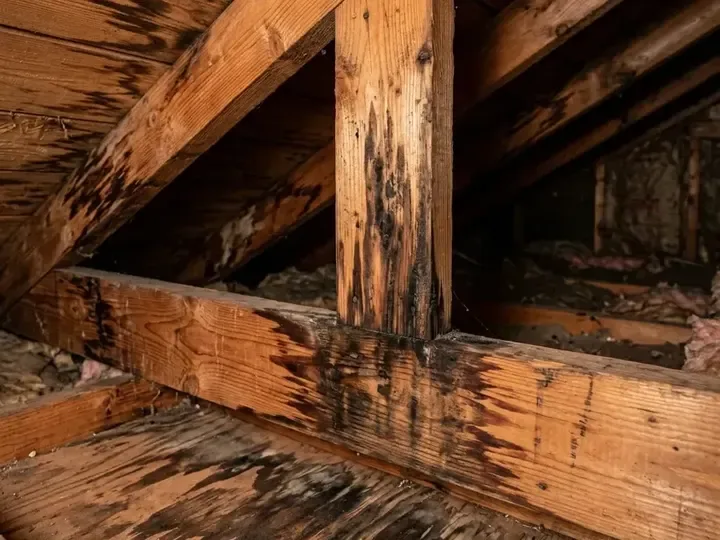
A roof leak is weather getting inside. In Sacramento the risk comes with the cold winter and spring storms, which can bring intense showers and hail even though snow is rare. Water finds the weak point in flashing, a valley, a vent boot or hail-damaged shingles, soaks the attic insulation and decking, and then shows up as a stain on a ceiling or a wet wall below. Leaks from plumbing above a ceiling are covered under ceiling leak water damage, and the drying time estimator gives a rough drying window.
How a roof leak water damage job runs, step by step
Trace the entry point
The walkthrough tech follows the water from the ceiling stain into the attic with thermal imaging and meters to find where it entered the roof.
Protect the roof
A temporary tarp is set over the entry point when the weather allows, so the next storm does not soak the attic again during drying.
Remove wet insulation
Soaked insulation is bagged and removed, wet ceiling drywall below comes down where readings call for it and water is extracted.
Dry decking and ceilings
Air movers and LGR dehumidifiers dry rafters, decking, joists and walls until readings reach a dry reference, then the roofer repairs.
First steps for roof leak water damage right now
- Contain the drip: Put buckets under drips, move furniture and electronics away and cover what cannot be moved with plastic sheeting.
- Stay off the roof: Do not climb onto a wet roof during or right after a storm. A roofer or the crew can set a temporary tarp safely once the weather allows.
- Check the attic safely: If the attic is easy to reach, look for wet insulation and drips with a flashlight, staying on the joists and away from wiring.
- Photograph storm damage: Photograph the ceiling stains, the attic and any visible roof or hail damage from the ground, with the date of the storm noted.
Rain dripping into the house after a storm? Catch the drips, stay off the roof and call the Sacramento storm crew.
Ask about the attic dryingHow storm water gets in
- Worn or lifted flashing at chimneys, walls and skylights
- Roof valleys where water concentrates
- Cracked vent boots and pipe penetrations
- Shingles cracked or knocked loose by hail and wind
- Gutters clogged with leaves that back water under the roof edge
Leaves from shade trees clog gutters and valleys before the first big storm of the season, and large homes like those near McKinley Park and the Fabulous Forties in East Sacramento carry long runs of gutter and many valleys to keep clear.
Roof leaks and ceiling leaks are different jobs
A roof leak runs with the rain and stops between storms, which can hide it for weeks while the attic stays damp. A ceiling leak from plumbing runs until the pipe is fixed. Because a roof leak needs a roofer as well as drying, the crew can set a temporary tarp so the next storm does not undo the dry-out.
Drying the attic and the rooms below
Soaked insulation is bagged and removed, wet decking and rafters are dried with air movers and dehumidifiers, and ceilings below are opened where readings show trapped water. In homes from the 1950s to the 1980s across South Natomas and in the 1960s Greenhaven homes, older roofs and attics get a close look for earlier leaks that never fully dried.
Wet walls under a leaking roof get checked too, because rain that reaches the top plate can run down inside a wall without ever staining the ceiling. Thermal imaging and meters show whether those cavities need to be opened.
A slow roof leak can hide for weeks
Because a roof leak only runs when it rains, the attic can stay damp between storms while the ceiling looks fine. Insulation that keeps getting wet loses its value and holds moisture against the decking and the drywall below. After every big storm, check the ceilings near exterior walls, valleys and chimneys for new stains.
What does roof leak water damage cost in Sacramento, CA?
Roof leak water damage here typically runs $1,200 to $6,000 for drying and removal, separate from the roof repair. How much insulation is soaked, how many ceilings are wet and how many storms the leak has run through set the number.
One ceiling area
- Small attic area
- Insulation section removed
- Ceiling dried
Attic and rooms
- Several ceilings wet
- Decking and rafters dried
- Temporary tarp
Long-running leak
- Repeated storm wetting
- Walls and floors wet
- Longer drying run
Ranges are typical, not a quote: water category, square footage, material class and how fast drying started move the number most. The water damage cost calculator gives a planning range for your own rooms.
Insurance for roof leak water damage
Storm damage to a roof, such as hail or wind lifting shingles, is often covered along with the water damage it causes, while a leak from a worn roof can be treated as maintenance. Adjusters look for the storm date, the entry point and how far the water spread. The crew photographs the attic, the ceilings and the visible roof damage and logs the readings from the first visit.
The claim file the drying team builds holds a moisture map of every wet room, daily psychrometric drying logs, timestamped photos taken before any demolition, the water category and class of loss, and a line-item scope an adjuster can check. Sudden and accidental water from a pipe or appliance is treated differently from flood water, which most homeowners policies leave to separate flood coverage. Coverage depends on your own policy, so it is worth checking with your insurer before anything is decided. Keep copies of the photos, the readings and every invoice together, because a complete file is what keeps a water claim moving.
How a water loss is handled here, start to finish
Rapid local response
Dispatch runs 24/7 and active water is treated as urgent at any hour, from Natomas and Point West down to the Pocket and Greenhaven.
IICRC S500 drying standard
Truck-mounted extraction, LGR dehumidifiers and air movers sized to the class of loss, with readings logged at the same points every day.
Claim-ready documentation
Moisture maps, psychrometric logs and timestamped photos taken before any wet material is cut out, so the adjuster sees the whole loss.
Valley water experts
River-bend lots, levee-side floodplain blocks, decades-old plumbing in mid-century subdivisions and winter storm leaks all shape the plan.
Roof leak water damage across Sacramento and nearby communities
The restoration team covers ZIP 95822, 95823, 95831 and 95832 and the neighborhoods around them, from the Pocket and Greenhaven along the river bend to Natomas, East Sacramento, Midtown and the established blocks of Upper Land Park and Elder Creek.
Nearby coverage reaches West Sacramento, Elk Grove, Davis, Citrus Heights, Rancho Cordova.
See every neighborhood and ZIP covered ›Related water damage services
Roof Leak Water Damage questions in Sacramento, CA
How do I know a stain came from the roof and not a pipe?
A roof leak usually appears or grows during and after rain and sits near exterior walls, valleys or chimneys. A plumbing leak keeps running regardless of the weather. Thermal imaging and an attic check confirm it. Stains that grow after each storm and stop between them point clearly to the roof.
Do Sacramento storms really cause roof leaks?
Yes. Snow is rare, but cold winter and spring storms can bring intense showers and hail, which find worn flashing, valleys, vent boots and clogged gutters. Gutters full of leaves can push water back under the roof edge in a heavy shower.
Does wet attic insulation have to be replaced?
Soaked insulation is usually removed, because it holds water against the decking and ceiling and loses its insulating value. Lightly damp areas can sometimes be dried in place. New insulation goes in only after the decking and joists read dry.
Can the roof be tarped before it is repaired?
Yes. A temporary tarp over the entry point keeps the next storm out while the attic and ceilings dry and the roofer schedules the repair. The tarp stays until the roofer finishes, so the drying is not undone by the next storm.
Is roof leak water damage covered by insurance?
Water damage from sudden storm damage is often covered, while leaks from an old or worn roof may be treated as maintenance. Coverage depends on your policy, so check with your own insurer. Photos of hail damage and the storm date help show the leak came from a sudden event.
How long does it take to dry an attic after a roof leak?
Most attics and ceilings dry in three to five days once wet insulation is out and equipment is running, longer if decking or framing is saturated. Decking that stays wet between storms can take longer, and readings decide.
Who repairs the roof itself?
A roofer repairs the roof. The restoration team handles the water damage: tarping if needed, removing wet insulation and drywall and drying the structure. The roofer and the drying team can share the attic photos to plan both jobs.
Can a roof leak cause mold in the attic?
Yes, when insulation and decking stay damp between storms. Damp materials can start to grow mold within 24 to 48 hours, which is why attics are dried and verified with readings. That is why an attic check after every big storm is worth a few minutes.
Storm leak through the roof? Get the attic dried.
The restoration team traces the leak, tarps the entry point, removes wet insulation and dries the attic and ceilings.
(888) 774-9605Book the storm leak dry-out