Structural Drying in Davis, CA
(888) 774-9605Set up the drying equipment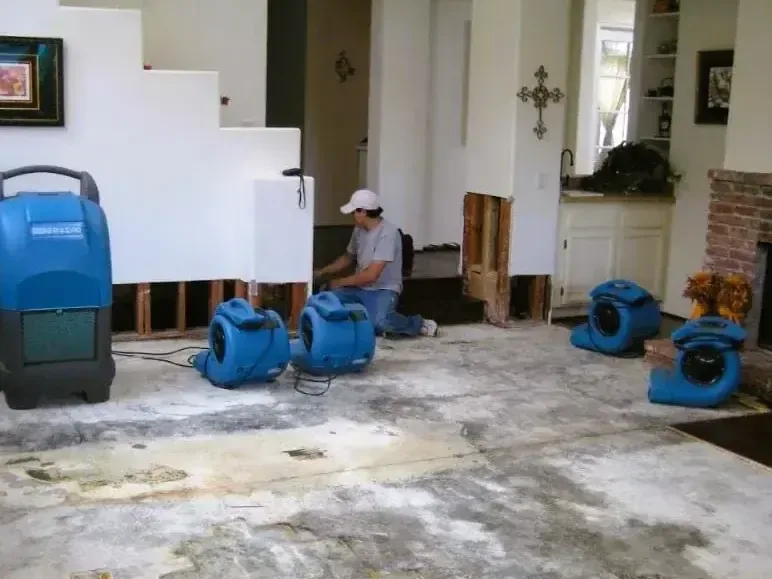
Structural drying is the slow, technical part of a water loss, and it decides whether a house is truly dry or only looks it. Framing, subfloors and the back of drywall can hold moisture for days after standing water is gone. In this area, the wet season from mid-November to mid-March is when most drying jobs start.
How a structural drying and dehumidification job runs, step by step
Map the moisture
Meters and a thermal camera record starting readings in walls, floors and ceilings, and wet zones are marked.
Set the equipment
Air movers and dehumidifiers are placed to match the room and the water category, with vents covered and doors closed.
Read and adjust daily
Moisture readings decide moving, adding or removing machines, and every change is logged for the file.
Confirm the dry goal
Equipment comes out only when readings match dry reference points, and the records are provided for the claim.
First steps for structural drying and dehumidification right now
- Get the water out first: Standing water must be extracted before drying can work, so stop the source and remove what you can safely before equipment is brought in.
- Clear the room: Move furniture, rugs and breakables out of wet rooms so air can reach floors and wall bases, and photograph the room before anything is moved.
- Plan for power: Several machines draw real power, so note which outlets and circuits are dry and safe, and tell the crew about any that trip.
- Call for a drying plan: Describe the source, the rooms and how long materials have been wet, so the crew sizes air movers and dehumidifiers to the job.
Water gone but walls still damp? Describe the rooms and a local crew will explain how drying is sized and checked before anything is closed up.
Price out the drying workHow drying equipment works
Air movers push dry air across wet surfaces so water evaporates, and dehumidifiers pull that moisture out of the air so it cannot settle again on cooler surfaces. In sealed rooms the equipment runs continuously, with doors closed and vents covered. The setup changes with the room: a bathroom behind a tile wall needs a different plan from an open living room in Mace Ranch or Westwood.
The S500 standard sorts jobs by class:
- Class 1 and 2: small areas, or carpet and wall bases wet
- Class 3: water from above, soaking walls and ceilings
- Class 4: deep materials such as hardwood, plaster and concrete
- Water category sets the cleanup method as well
Daily readings, not guesses
Each visit, the crew takes moisture readings in the same spots and compares them with dry reference points from unaffected materials. Equipment is moved, added or removed based on those numbers, not on a calendar.
Hidden areas get attention too. Thermal cameras find wet insulation and cavity pockets, and small holes allow warm air behind baseboards and cabinets. The process starts after water is pulled out, as covered under water extraction, and continues until readings show the dry goal.
Drying also protects a repair budget, because materials that dry in place do not need to be replaced. Leaks inside walls are explained on the burst pipe water damage page.
What to expect at home
Equipment is loud and warm, and rooms may be closed off for days. Plan for power draw from several machines, keep doors closed and never switch equipment off. The crew returns to read moisture and adjust. Stay out of any sealed containment area. Only when meters show the goal has been reached is the equipment removed, and the readings are saved for the claim.
Drying is not finished when it feels dry
Surfaces can feel dry while studs, subfloors and the back of drywall are still wet. Pulling equipment early invites swelling, odor and repeat damage, which is why readings, not touch, decide when the job ends. Keep doors closed and machines running until the crew confirms the goal. Moving furniture back too early can trap moisture behind it.
What does structural drying and dehumidification cost in Davis, CA?
Structural drying runs from $1,000 to $2,500 for a Class 1 or 2 job up to $5,000 to $10,000+ for Class 4 materials. The class of loss, the equipment needed and the days it runs set the final figure.
Class 1 or 2
- Small wet area
- Few machines
- Short equipment run
Class 3
- Walls and ceilings wet
- More machines
- Daily readings
Class 4
- Deep materials wet
- Extended drying
- Specialty equipment
Ranges are typical, not a quote: water category, square footage, material class and how fast drying started move the number most. The water damage cost calculator gives a planning range for your own rooms.
Documenting the drying
Adjusters want proof that materials reached a dry goal, not just that equipment ran. The crew records starting and daily readings, equipment placement and run times, and the final dry confirmation. Policy terms decide what is covered, so check yours and ask the adjuster; no coverage is promised. Daily readings are what turn a drying job into evidence the claim can rely on, and they are shared with the adjuster on request.
The claim file the drying team builds holds a moisture map of every wet room, daily psychrometric drying logs, timestamped photos taken before any demolition, the water category and class of loss, and a line-item scope an adjuster can check. Sudden and accidental water from a pipe or appliance is treated differently from flood water, which most homeowners policies leave to separate flood coverage. Coverage depends on your own policy, so it is worth checking with your insurer before anything is decided. Keep copies of the photos, the readings and every invoice together, because a complete file is what keeps a water claim moving.
How a water loss is handled here, start to finish
Rapid local response
Dispatch runs 24/7 and active water is treated as urgent at any hour, across Davis and the neighboring valley cities.
IICRC S500 drying standard
Truck-mounted extraction, LGR dehumidifiers and air movers sized to the class of loss, with readings logged at the same points every day.
Claim-ready documentation
Moisture maps, psychrometric logs and timestamped photos taken before any wet material is cut out, so the adjuster sees the whole loss.
Valley water experts
River-city levees, winter atmospheric river storms, older plumbing and newer subdivisions all shape how each dry-out is planned.
Structural drying and dehumidification across Davis and nearby communities
Crews set drying equipment in Mace Ranch, Westwood, Evergreen, Stonegate, Wildhorse, Covell Park, Willowbank and the other neighborhoods across the city, with 24/7 dispatch and daily readings throughout the dry-out. Rentals and owner occupied homes get the same dry goal.
The same service nearby: structural drying and dehumidification in Sacramento, West Sacramento, Elk Grove.
Water damage restoration in Davis › Every town covered ›Related water damage services
Structural Drying and Dehumidification questions in Davis, CA
What is structural drying?
It is the process of removing moisture held in framing, subfloors, drywall and other materials after standing water is gone. Air movers and dehumidifiers do the work, and daily readings decide when it is finished. It is the step that keeps a cleaned room from turning musty or warped weeks later.
How long does structural drying take?
It depends on the materials, the water category and how long they were wet. The crew reads moisture each day and removes equipment only when walls, framing and subfloors reach their dry goal. Thicker materials such as hardwood take longer than carpet or drywall.
Why are dehumidifiers used along with fans?
Fans move air across wet surfaces so moisture evaporates, but that moisture then sits in the air. Dehumidifiers remove it, so it does not settle on cooler surfaces or slow down the drying. The pairing is what makes professional drying faster than a fan alone.
What are drying classes?
Under the S500 standard, Class 1 and 2 cover smaller wet areas and wet carpet, Class 3 covers water from above that soaks walls and ceilings and Class 4 covers deep materials such as hardwood, plaster and concrete.
Can I run the equipment myself?
A hardware store fan cannot match the airflow and dehumidification of professional machines, and drying without readings is guesswork. Crews size equipment, monitor it and adjust it based on meter results. Without readings there is no way to know when it is safe to stop.
How much does structural drying cost in Davis?
Prices run from $1,000 to $2,500 for Class 1 or 2, $2,500 to $5,000 for Class 3 and $5,000 to $10,000+ for Class 4. A walkthrough and starting readings set the real number.
Does insurance pay for structural drying?
When the loss is covered, drying is usually part of the claim. Keep the moisture logs, photos and equipment records, and ask the adjuster what documentation the policy requires. Photos of the equipment in place are part of the same file.
Will structural drying damage my walls or floors?
Rarely. Small holes drilled behind baseboards or cabinets let air in, and they are patched afterward. Drying in place is usually gentler and cheaper than tearing materials out, as long as the water was clean and caught in time.
Get the structure dried and documented
One call sets up equipment, daily readings and the dry goal records that your adjuster and contractor will need.
(888) 774-9605Davis drying help