Roof Leak Water Damage in West Sacramento, CA
(888) 774-9605Roof leaking inside? Call the drying crew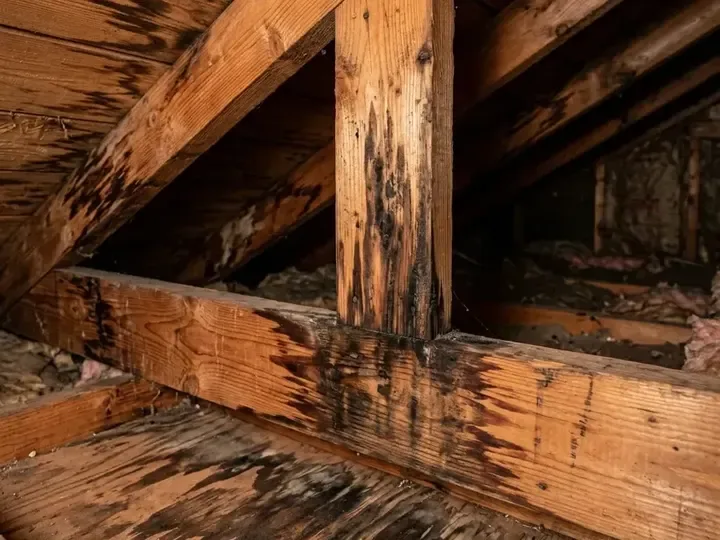
A roof leak starts quietly. Rain gets past worn shingles, a lifted flashing or a cracked seal, runs down a rafter and soaks the insulation, so the first sign inside the house is often a stain on a ceiling that is already saturated above. The roofer repairs the opening, and the restoration crew removes and dries what the water reached.
Roof leaks are most common after wind and heavy rain, and the early signs inside are small: a faint stain, a damp smell in a closet or a drip that shows up only during a downpour. The crew works from those hints to find the real boundary of the wet area.
How a roof leak water damage job runs, step by step
Trace the wet path
A thermal camera and meters follow the water from the roof opening through the attic, ceiling and walls.
Remove soaked material
Wet insulation and sagging ceiling drywall are cut out and bagged, and the wood above is exposed to air.
Place drying equipment
Air movers and dehumidifiers dry the attic framing, ceiling and rooms, and equipment is set for the size of the loss.
Verify the dry reading
Daily readings continue until rafters, decking and drywall match a dry reference, and the record goes to the owner.
First steps for roof leak water damage right now
- Catch the drips: Set buckets under active drips, lay plastic over furniture and floors, and move belongings out of the room below the stain.
- Check for sagging: If a ceiling is bulging, keep people out from under it and let the crew release the water, rather than poking at it with tools.
- Call a roofer: A roofer needs to cover or repair the opening, so book that early, because new rain will undo any drying that has been done.
- Photograph the leak: Capture the stain, the dripping water and any visible roof damage with dated photos, and note when the rain began.
Rain coming through the roof? Call now and the wet attic and ceilings get dried properly.
Begin attic and ceiling dryingWhy storms stress roofs here
Atmospheric rivers brought heavy rain to the Sacramento area in January 2017 and again in January 2023, when winds also topped 60 mph. Wind lifts shingles and flashing, and sustained rain finds every weak point. After storms like those, homes in older parts of town such as Broderick and Bryte and in Southport neighborhoods like River Ranch and Newport may all show new stains.
What gets opened and removed
The crew starts in the attic, where moisture meters and a thermal camera show how far the water ran along rafters and across insulation. Saturated insulation is bagged out, wet decking is dried or flagged for the roofer, and the ceiling drywall below is cut where it sags or stays wet.
- attic insulation removed where soaked
- ceiling drywall opened below the leak
- rafters and decking dried in place
- walls checked where water ran down
Drying a roof leak properly
Temporary roof protection is the roofer's job, since water must stop entering before drying can finish. The drying phase uses air movers and dehumidifiers in the attic and rooms, much like the process described in ceiling leak water damage and structural drying. Readings confirm that wood and drywall are dry before insulation goes back.
A drying job after a roof leak also protects the structure above and below. Rafters that stay wet can darken and soften, and attic insulation that sits soaked loses its value as a thermal barrier, which is why the crew treats the attic as seriously as the ceiling.
Another storm will undo a drying job
A dry attic is not safe if the roof is still open. Water that enters again soaks fresh insulation and re-wets framing. Arrange the roof repair or a temporary cover quickly, and keep drying equipment running until readings confirm the structure is dry. The longer a wet attic sits, the more of the insulation and decking has to be replaced, so speed matters.
What does roof leak water damage cost in West Sacramento, CA?
Roof leak water damage here typically costs $1,200 to $6,000, depending on how far the water traveled below the roof. The water damage cost calculator gives a planning range. Leaks that ran through several storms or reached multiple rooms land in the upper tiers.
One ceiling area
- A single stained area
- Drywall section cut
- Attic spot dried
Attic and rooms
- Insulation removed
- Several ceilings wet
- Walls dried
Long-running leak
- Framing deeply wet
- Large tear-out
- Extended drying run
Ranges are typical, not a quote: water category, square footage, material class and how fast drying started move the number most. The water damage cost calculator gives a planning range for your own rooms.
Roof leak claims and what insurers look at
Policies often cover water damage from a storm that opens the roof, yet may not pay for the roof repair itself or for neglected, worn roofing. Adjusters look at the storm date, the roof condition and the interior damage. The crew records the source, the wet area and each reading. Keep storm dates, roofer estimates and photos of the roof damage in one folder, since the adjuster will ask for all three.
The claim file the drying team builds holds a moisture map of every wet room, daily psychrometric drying logs, timestamped photos taken before any demolition, the water category and class of loss, and a line-item scope an adjuster can check. Sudden and accidental water from a pipe or appliance is treated differently from flood water, which most homeowners policies leave to separate flood coverage. Coverage depends on your own policy, so it is worth checking with your insurer before anything is decided. Keep copies of the photos, the readings and every invoice together, because a complete file is what keeps a water claim moving.
How a water loss is handled here, start to finish
Rapid local response
Dispatch runs 24/7 and active water is treated as urgent at any hour, across West Sacramento and the neighboring valley cities.
IICRC S500 drying standard
Truck-mounted extraction, LGR dehumidifiers and air movers sized to the class of loss, with readings logged at the same points every day.
Claim-ready documentation
Moisture maps, psychrometric logs and timestamped photos taken before any wet material is cut out, so the adjuster sees the whole loss.
Valley water experts
River-city levees, winter atmospheric river storms, older plumbing and newer subdivisions all shape how each dry-out is planned.
Roof leak water damage across West Sacramento and nearby communities
Roof leak crews serve every West Sacramento neighborhood, from Broderick, Bryte and the Town of Washington to Southport, Arlington Oaks, Linden, Gateway and River Ranch, with 24/7 dispatch after storms and for any leak.
The same service nearby: roof leak water damage in Sacramento, Davis, Elk Grove.
Water damage restoration in West Sacramento › Every town covered ›Related water damage services
Roof Leak Water Damage questions in West Sacramento, CA
Who fixes a roof leak, the roofer or the restoration crew?
The roofer repairs or covers the opening. The restoration crew removes wet insulation and drywall, dries the attic and rooms, and documents the damage. Most claims need both trades. The two trades can work on the same house at once, as long as the roofer stops the water first.
Can wet attic insulation be dried in place?
Usually not. Insulation holds water and loses its value once soaked, so it is removed. Rafters and decking underneath are dried, and new insulation goes in after readings confirm dry wood. Fresh insulation is cheap compared with the cost of leaving wet insulation to damage the wood.
How do I know the ceiling is wet above the stain?
Stains show only the lowest point of the water. Moisture meters and a thermal camera find the wetness above, in insulation and framing, so the true size of the loss is known. A damp spot of a few inches on the surface can sit over a much larger wet patch above.
Should I go on the roof to look for the leak?
No. Wet roofs are slippery, especially after wind and rain. Stay inside, mark the stain and let a roofer inspect the roof safely while the crew handles the interior.
Does insurance cover a roof leak?
Often for storm damage and its interior results, but not always for the roof itself or for wear. Photograph the damage, report quickly and ask your insurer about your policy terms.
How long does it take to dry after a roof leak?
Small leaks dry in several days, and larger ones in a week or longer. The crew keeps equipment running until attic wood and ceiling drywall match dry readings. A dry-looking ceiling can still hold moisture in the wood above it, so readings come first.
Can a roof leak damage the walls too?
Yes. Water runs down inside wall cavities from the attic, so the walls below the leak are checked and dried, with small openings made where meters show moisture.
Will drywall have to be replaced after a roof leak?
Where it sagged, stained deeply or stayed wet, yes. Drywall that was only lightly wet may dry in place. The readings set that decision, and the crew documents it for the claim. Light stains that fade after drying can be primed and painted by a contractor.
Roof opened and the ceiling is wet? Get the water dried.
Wet insulation and drywall are removed, the attic and rooms are dried, and the readings and photos go straight into the claim file.
(888) 774-9605Report the roof leak damage