Roof Leak Water Damage in Elk Grove, CA
(888) 774-9605Get the attic dried out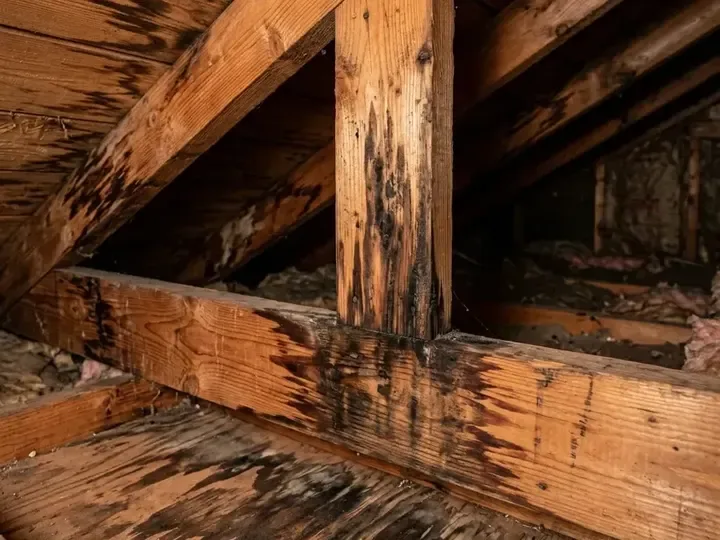
In Elk Grove the dry months run from June through August, with almost no rain, and January, February and March bring the most. Average rainfall is about 18.59 inches a year, so a roof that sat through a dry summer can show its weak spots the first time a heavy storm arrives. The water usually travels along rafters before it shows up on a ceiling.
How a roof leak water damage job runs, step by step
Locate the water
A moisture meter and thermal camera trace water from the stain back along the rafters and across the attic floor.
Remove wet materials
Soaked insulation is bagged and removed, and ceiling drywall that has lost strength is cut out and cleared away. Bagged insulation is photographed before disposal.
Dry the framing
Air movers and dehumidifiers dry the rafters, deck and ceiling cavity until readings reach the target. Rafters and deck are measured at several points.
Document and hand over
Photos, moisture logs and the equipment record go to the homeowner and insurer once the attic is dry. The roofer's schedule is noted in the log.
First steps for roof leak water damage right now
- Contain the drip: Place buckets under drips, move furniture and electronics out of the way and keep clear of any sagging ceiling or light fixture.
- Call for attic drying: Describe the stain, where the roof may be leaking and the last storm so the crew can bring meters, fans and insulation removal tools.
- Photograph the storm damage: Take dated photos of ceiling stains and any attic water you can see from a safe spot, because the claim will need proof of the date.
- Arrange the roof repair: Contact a roofer to tarp or repair the opening, since new rain can wet the attic again before drying is finished.
Roof leaking after a storm? Describe the stain and a local crew will plan the attic drying.
Explain the attic leakWhat drying an attic involves
Wet insulation holds water against the ceiling below and keeps the framing damp, so it is removed. Air movers and dehumidifiers then dry the rafters, the underside of the roof deck and the top of the ceiling drywall. Moisture meters show which sections still hold water.
- Remove wet insulation from the attic floor
- Dry rafters and the roof deck underside
- Open stained or sagging ceiling sections
- Check walls where the water ran down
Roof repair comes first
A roofer finds and fixes the opening, whether it is a lifted shingle, a flashing gap or a worn vent boot. Until that is done, more rain can undo the drying, so crews coordinate with the roofer and tarp if needed.
When water has reached the ceiling below, the work follows ceiling leak water damage steps, and the framing drying uses the same methods as structural drying.
Temporary protection is part of the job. A tarp or plastic sheet over the opening stops more rain from reaching the attic while a roofer schedules the repair, and crews photograph the opening before and after it is covered. Rain is most likely from January to March, so the temporary cover matters most in those months.
Homes with finished attic rooms or recessed lights in the ceiling need extra attention, because water collects in light housings and can drip through fixtures. Those circuits are checked before they are used again. Roof valleys, vent boots and chimney flashing are common entry points that a roofer checks first.
Documenting the storm damage
Photos of the stained attic and ceiling, readings and the equipment log are saved for the claim. Roof leaks in Laguna West, Stonelake and East Franklin follow the same process, and each home is checked on its own.
Stay off a wet roof and ceiling
A wet roof is slippery, and wet attic insulation hides weak spots in the ceiling below. Do not climb on the roof in the rain, and do not step on wet insulation between joists. If a ceiling is sagging or dripping near a light, keep clear and call for help.
What does roof leak water damage cost in Elk Grove, CA?
Roof leak drying cost depends on how much of the attic is wet and whether ceilings below were affected. A single ceiling area sits at the low end, while a long running leak through several rooms reaches the top tier.
One ceiling area
- Single ceiling section
- Insulation spot removal
- Short drying run
Attic and rooms
- Attic and ceilings wet
- Insulation removal
- Longer equipment run
Long-running leak
- Several rooms affected
- Wall and framing drying
- Extended monitoring
Ranges are typical, not a quote: water category, square footage, material class and how fast drying started move the number most. The water damage cost calculator gives a planning range for your own rooms.
Roof leaks and your insurance claim
Policies often cover sudden storm damage and treat wear, age and long neglected leaks differently. Dated photos of the stain, moisture readings and a roofer's finding show what happened and when. Crews supply the drying records, and the insurer decides what is covered. The storm date and the first sign of the stain help the adjuster place the loss, so keep any roofer estimate and invoice with the other records.
The claim file the drying team builds holds a moisture map of every wet room, daily psychrometric drying logs, timestamped photos taken before any demolition, the water category and class of loss, and a line-item scope an adjuster can check. Sudden and accidental water from a pipe or appliance is treated differently from flood water, which most homeowners policies leave to separate flood coverage. Coverage depends on your own policy, so it is worth checking with your insurer before anything is decided. Keep copies of the photos, the readings and every invoice together, because a complete file is what keeps a water claim moving.
How a water loss is handled here, start to finish
Rapid local response
Dispatch runs 24/7 and active water is treated as urgent at any hour, across Elk Grove and the neighboring valley cities.
IICRC S500 drying standard
Truck-mounted extraction, LGR dehumidifiers and air movers sized to the class of loss, with readings logged at the same points every day.
Claim-ready documentation
Moisture maps, psychrometric logs and timestamped photos taken before any wet material is cut out, so the adjuster sees the whole loss.
Valley water experts
River-city levees, winter atmospheric river storms, older plumbing and newer subdivisions all shape how each dry-out is planned.
Roof leak water damage across Elk Grove and nearby communities
Roof leak crews cover Laguna West, Laguna Ridge, Stonelake, Franklin Reserve, East Franklin and Foulks Ranch, along with Sheldon, Laguna Springs and Old Town Elk Grove, with dispatch open 24/7 during storm season and all year.
The same service nearby: roof leak water damage in Sacramento, West Sacramento, Rancho Cordova.
Water damage restoration in Elk Grove › Every town covered ›Related water damage services
Roof Leak Water Damage questions in Elk Grove, CA
When do roof leaks usually show up?
Often at the first heavy storms after the dry summer. January averages 3.5 inches of rain, with February at 3.38 and March at 2.88, so those months test every roof. A dry summer also lets dust and debris collect in gutters, which then back up and push water under shingles.
Does a roof leak damage the attic first?
Usually, yes. Water soaks insulation and runs along rafters before it reaches the ceiling, so the attic can be wet well before any stain shows below. Insulation that stays wet also loses its value, so the attic can feel colder and the energy bill can rise.
Does wet attic insulation have to be removed?
In most cases, yes. Wet insulation holds water against the ceiling and does not dry well in place, so it is taken out and replaced after the structure is dry. Fiberglass batts that hold water compress and stay damp, which is why drying alone rarely saves them.
Who repairs the roof?
A roofer repairs the opening. The drying crew handles the water damage and works with the roofer so new rain does not undo the dry-out. Ask the roofer to document what was found, since the findings help the insurer understand the cause.
Can I wait for dry weather to deal with a roof leak?
Waiting lets wet insulation and framing stay damp for longer, which makes the damage worse. Drying can start while a roofer arranges the repair. A tarp or temporary patch is often arranged while the weather clears and a permanent repair is scheduled.
How long does attic drying take?
It depends on how much insulation and framing are wet. Readings on the rafters and deck decide when the equipment can leave. Rafters and the roof deck underside are measured at several points, and the results are logged.
Can a roof leak damage walls?
Yes. Water can run down inside a wall cavity from the attic, so walls near the stain are checked with a moisture meter. Stains on walls, bubbling paint and damp baseboards are signs that water traveled downward.
Will insurance cover storm roof damage?
Often for sudden storm damage, though policies differ and wear is treated differently. Ask your insurer and keep photos, readings and receipts. Photos of the stain, taken over a few days, show whether it is growing, which helps the claim.
Roof leak damage in your Elk Grove home?
One call sets up attic drying, wet material removal and records for your insurer, while a roofer handles the opening.
(888) 774-9605Reach the roof leak crew