Roof Leak Water Damage in Rancho Cordova, CA
(888) 774-9605Dry out after the storm leak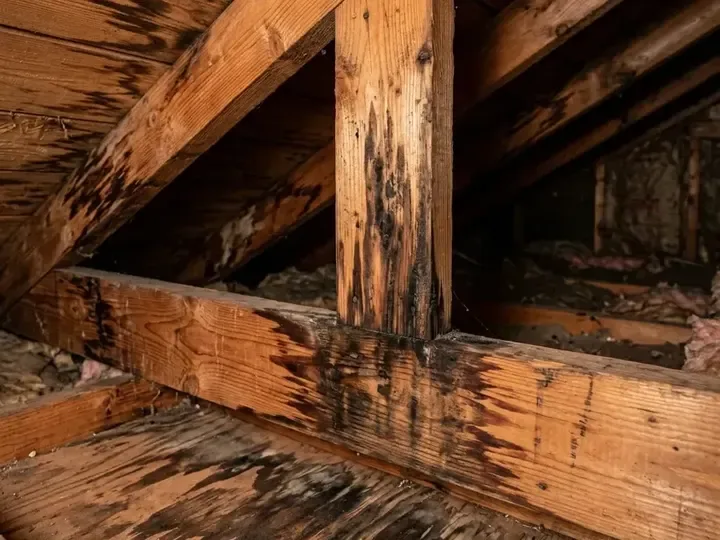
A roof leak usually announces itself with the first heavy rain after a long dry stretch. Water finds a lifted shingle, a cracked flashing or a failed seal, runs along the underside of the decking and soaks the insulation below before it shows up as a ceiling stain. The leak may run for a long time in the attic before anyone sees damage, and the wet insulation holds water against the framing.
How a roof leak water damage job runs, step by step
Find the water path
Meters and a thermal camera trace moisture from the roof opening through the attic and down into the ceilings and walls.
Coordinate with the roofer
The roof opening is closed by a roofer, and drying is timed so no new water re-wets the materials already treated.
Remove and dry
Insulation and drywall that cannot recover are removed, and the remaining framing is dried with controlled airflow.
Verify and report
Readings and photos show the attic and living space are dry, and the file is organized for the owner or adjuster.
First steps for roof leak water damage right now
- Catch the drips: Set buckets and plastic sheeting under active leaks, move belongings away and photograph the stains and the drip path.
- Keep clear of sagging spots: Stay out from under any bowed ceiling, because pooled water adds a great deal of weight to the drywall and insulation.
- Remove wet materials: Soaked insulation and ruined ceiling sections are cut out, which also lets the attic and cavity air begin to dry.
- Dry the roof structure: Air movers and dehumidifiers dry rafters, decking and the rooms below until moisture readings reach target levels.
Roof leaking into the attic or ceiling? Describe the stains and the storm, and a local pro will plan the dry-out.
Explain the storm leakWhy the rainy months matter
About 18.14 inches of rain falls in a normal year, concentrated between December and March, so roof leaks tend to appear when the first big storms of winter arrive. Hot dry summers can dry out and stress roofing materials, and the cool wet months then expose weak spots at once. Level valley ground means the water that lands on a roof also has nowhere else to go, so every opening gets tested.
These steps help during a storm leak:
- Place buckets and tarps inside to catch drips and protect belongings
- Photograph the stain, the drip and the attic if it is safe to enter
- Keep people out from under any bulging ceiling section
- Call a roofer for the opening and a restoration crew for the water
What the attic needs
Wet insulation is heavy, holds moisture and rarely recovers, so it is removed in the affected sections. Rafters and decking are measured with a moisture meter and dried with air movers and dehumidifiers, which pull moisture out of the wood before it can cause lasting damage. Ceilings below are opened where they have bowed.
The work is sequenced on purpose. The roofer closes the opening so no new water arrives, the restoration crew extracts and removes ruined materials, and drying follows until the attic and the rooms below read dry.
Homes in the Villages of Zinfandel, Sunridge Park and near White Rock Road are handled the same way, with moisture readings setting the length of the dry-out.
Next steps
Soaked ceilings are covered on the ceiling leak page, and the structural drying page explains how rafters and walls are brought to dry goals. The service hub lists every other service.
Wet attics and ceilings are unsafe to enter
A saturated ceiling can collapse, wet insulation hides wiring and attic floors can be slippery or unsound. Stay out of the attic during a storm, keep people away from bowed ceilings and leave extraction and removal to a pro who has the right gear. Call a pro early.
What does roof leak water damage cost in Rancho Cordova, CA?
Roof leak costs depend on how long water reached the attic and how many ceilings it affected. One ceiling area is the smallest job, while a long-running leak can soak insulation, rafters and several rooms and needs much more drying.
One ceiling area
- One stained ceiling
- Wet insulation removed
- Short drying period
Attic and rooms
- Attic and two rooms wet
- Rafters and decking dried
- Multiple monitoring visits
Long-running leak
- Large attic area soaked
- Ceilings and walls removed
- Extended drying plan
Ranges are typical, not a quote: water category, square footage, material class and how fast drying started move the number most. The water damage cost calculator gives a planning range for your own rooms.
Roof leaks and the policy
Storm damage to a roof may be covered, while slow wear or neglected maintenance often is not, so the cause matters to an adjuster. Photos of the leak, the attic and the moisture readings show when water arrived and how far it spread. Check the policy, because nothing here promises a claim result. Keep receipts for tarps and temporary repairs.
The claim file the drying team builds holds a moisture map of every wet room, daily psychrometric drying logs, timestamped photos taken before any demolition, the water category and class of loss, and a line-item scope an adjuster can check. Sudden and accidental water from a pipe or appliance is treated differently from flood water, which most homeowners policies leave to separate flood coverage. Coverage depends on your own policy, so it is worth checking with your insurer before anything is decided. Keep copies of the photos, the readings and every invoice together, because a complete file is what keeps a water claim moving.
How a water loss is handled here, start to finish
Rapid local response
Dispatch runs 24/7 and active water is treated as urgent at any hour, across Rancho Cordova and the neighboring valley cities.
IICRC S500 drying standard
Truck-mounted extraction, LGR dehumidifiers and air movers sized to the class of loss, with readings logged at the same points every day.
Claim-ready documentation
Moisture maps, psychrometric logs and timestamped photos taken before any wet material is cut out, so the adjuster sees the whole loss.
Valley water experts
River-city levees, winter atmospheric river storms, older plumbing and newer subdivisions all shape how each dry-out is planned.
Roof leak water damage across Rancho Cordova and nearby communities
Roof leak crews serve the Villages of Zinfandel, Sunridge Anatolia, Sunridge Park, Cordova Village and homes and shops near White Rock Road and Folsom Boulevard, with dispatch open 24/7 for properties across Rancho Cordova.
The same service nearby: roof leak water damage in Sacramento, Citrus Heights, Elk Grove.
Water damage restoration in Rancho Cordova › Every town covered ›Related water damage services
Roof Leak Water Damage questions in Rancho Cordova, CA
When do roof leaks usually show up here?
Mostly between December and March, when about 18.14 inches of yearly rain is concentrated. The first big storms of winter often reveal weak spots that stayed hidden through the hot dry summer.
Who repairs a roof leak, the roofer or the restoration crew?
Both are needed. A roofer closes the opening so no new water arrives, and the restoration crew dries the attic, ceilings and walls. Sequencing the two prevents re-wetting after the drying has started. Sequencing the visits avoids paying for the same work twice.
Does wet attic insulation have to be removed?
Usually yes in the affected sections. Insulation holds water against the framing and rarely recovers its performance, so it is taken out while rafters and decking dry. Meters show where the wet areas end.
How can a roof leak be told apart from a pipe leak?
Roof leaks follow rain and often appear near the exterior walls or roof lines, while pipe leaks continue in dry weather. Moisture readings, the pattern of stains and the attic itself all help identify the source.
Can a sagging ceiling be saved after a roof leak?
Sometimes, if it has not bowed and dries quickly. Bowed or saturated drywall is usually cut out so trapped water can drain and the cavity can dry. The decision comes from meter readings and a close look.
Is it safe to go into the attic after a storm leak?
Not while it is wet. Insulation hides wiring, framing can be slick and a soaked ceiling may not hold weight. A trained crew enters with the right protection and takes readings from safe positions.
Will the dry-out stop the roof from leaking again?
No. Drying restores the structure, while the roofer repairs the cause. If the roof is not repaired, the next storm can re-wet the same materials, so the repair should be scheduled alongside the dry-out.
What records help after a storm leak?
Dated photos of the stain, the drip and the attic, the roofer's repair invoice and the moisture readings from each visit give an adjuster a full picture. Notes on the date of the storm also help show when the water first arrived.
Dry the attic after the leak
Dispatch runs 24/7, and one call sets up attic drying, ceiling work and records while a roofer closes the opening.
(888) 774-9605Call about the attic leak