Structural Drying in Rancho Cordova, CA
(888) 774-9605Talk through a drying plan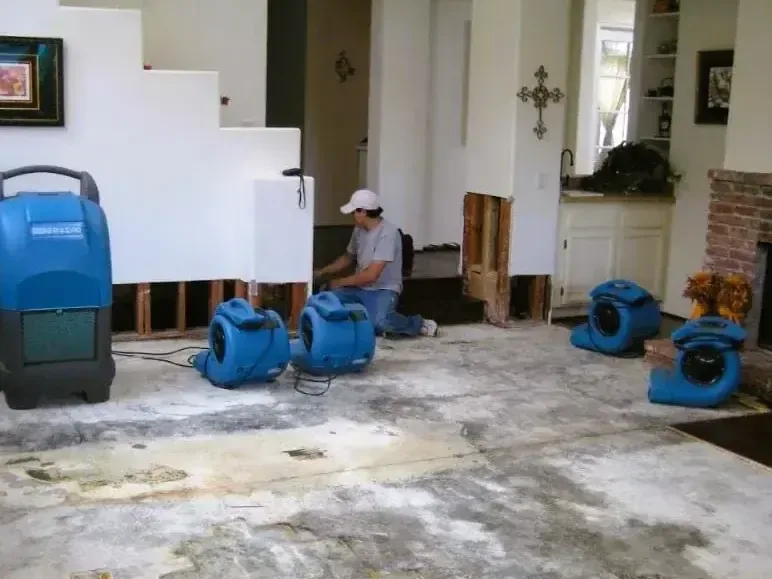
Structural drying is the long middle of nearly every water damage job. After the standing water is extracted, the wood, drywall, concrete and insulation still hold moisture that the eye cannot see, and that moisture does not leave on its own quickly. A drying plan sets equipment by room size, material and water category, then adjusts it using readings taken at every visit. The result is a structure that is dry in fact, not just dry to the touch.
How a structural drying and dehumidification job runs, step by step
Classify the loss
The size of the wet area and the materials involved set the drying class, which decides how much equipment the job needs.
Create airflow and low humidity
Air movers and dehumidifiers work together, since one moves moisture off surfaces and the other removes it from the air.
Monitor every visit
Readings are compared with the starting numbers and with a dry reference, and the plan changes whenever progress slows.
Release the equipment
Machines are pulled only after the final readings are in the dry range, and a drying report is compiled for the file.
First steps for structural drying and dehumidification right now
- Map the moisture: Meters and a thermal camera mark every wet surface and cavity, which sets the drying class and the equipment count for the plan.
- Place the equipment: Air movers are aimed across wet materials and dehumidifiers are sized to the volume of the space, with wall bases opened where needed.
- Read and adjust: Moisture readings are taken at each visit, and equipment is moved or removed as materials dry at different speeds.
- Confirm dry goals: When every material reaches its target, the equipment is removed and the final log and photos are provided.
Water gone but walls still damp? Describe the loss, and a local pro will map the moisture and plan the drying.
Describe the drying needHow drying works
Drying depends on three things working together: airflow across wet surfaces, dehumidifiers that remove moisture from the air and a stable room temperature. Air movers push dry air over materials so the water evaporates, while dehumidifiers capture that vapor so it does not settle back into the walls. Opening wall bases and cavities gives the air a path into places that would otherwise stay wet.
A drying job is built around these elements:
- A moisture map made when the equipment is first placed
- Air movers set to cover every wet surface and cavity
- Dehumidifiers sized to the volume and humidity of the space
- Readings at each visit, with equipment moved as materials dry
Why the season changes the plan
Hot dry summers and cool rainy winters change how fast structures dry here, so drying plans follow the season. In summer, indoor air can already be dry and drying moves quickly, though heat can stress some materials. In winter, outside humidity and cooler rooms slow the process, and dehumidifier capacity matters more.
Drying classes describe how much water a job involves, from small losses limited to part of a room to heavy losses that soaked wide areas of materials. Higher classes need more equipment and longer monitoring. The class is set from the readings on the first visit, not from a guess.
Homes in the Villages of Zinfandel, Sunridge Park and Cordova Village are dried the same way, with a plan built from the readings at each address.
Finishing and documenting
Drying follows water extraction in most jobs, and larger losses may also involve flood water cleanup. The service hub lists every other service, and the final moisture log is delivered so repairs can start with proof that the structure is dry.
Drying equipment should never be turned off early
Shutting off dehumidifiers or air movers because a room feels dry can leave moisture inside framing and subfloors. Hidden dampness invites musty odors and material damage, so equipment should stay running until a pro confirms with meter readings that every wet material has reached its goal. Moisture meter readings, not touch, decide when drying is finished.
What does structural drying and dehumidification cost in Rancho Cordova, CA?
Structural drying costs follow the drying class, which reflects how much water soaked how many materials. Small, limited losses are the lowest band, while heavy losses that wet wide areas need more equipment and longer monitoring.
Class 1 or 2
- Limited wet area
- A few pieces of equipment
- Short monitoring
Class 3
- Water from above
- Larger equipment count
- Repeated readings
Class 4
- Dense materials soaked
- Specialty drying methods
- Extended monitoring
Ranges are typical, not a quote: water category, square footage, material class and how fast drying started move the number most. The water damage cost calculator gives a planning range for your own rooms.
Drying logs and the claim
A drying log gives an adjuster the numbers: starting readings, equipment counts, daily progress and the final dry goals. These records help show the work was needed and finished. Coverage depends on the policy and the cause of the water, and nothing here promises a claim decision or a payment. Keep invoices for the equipment rental period.
The claim file the drying team builds holds a moisture map of every wet room, daily psychrometric drying logs, timestamped photos taken before any demolition, the water category and class of loss, and a line-item scope an adjuster can check. Sudden and accidental water from a pipe or appliance is treated differently from flood water, which most homeowners policies leave to separate flood coverage. Coverage depends on your own policy, so it is worth checking with your insurer before anything is decided. Keep copies of the photos, the readings and every invoice together, because a complete file is what keeps a water claim moving.
How a water loss is handled here, start to finish
Rapid local response
Dispatch runs 24/7 and active water is treated as urgent at any hour, across Rancho Cordova and the neighboring valley cities.
IICRC S500 drying standard
Truck-mounted extraction, LGR dehumidifiers and air movers sized to the class of loss, with readings logged at the same points every day.
Claim-ready documentation
Moisture maps, psychrometric logs and timestamped photos taken before any wet material is cut out, so the adjuster sees the whole loss.
Valley water experts
River-city levees, winter atmospheric river storms, older plumbing and newer subdivisions all shape how each dry-out is planned.
Structural drying and dehumidification across Rancho Cordova and nearby communities
Structural drying crews serve the Villages of Zinfandel, Sunridge Anatolia, Sunridge Park, Cordova Village and homes and businesses along Folsom Boulevard and White Rock Road, with dispatch open 24/7 every day across Rancho Cordova.
The same service nearby: structural drying and dehumidification in Sacramento, Citrus Heights, Elk Grove.
Water damage restoration in Rancho Cordova › Every town covered ›Related water damage services
Structural Drying and Dehumidification questions in Rancho Cordova, CA
What is structural drying?
It is the process of removing moisture from building materials after the standing water is gone, using air movers, dehumidifiers and daily meter readings. The goal is a structure that is dry through its framing, not just on the surface. It is the longest phase of most jobs.
How long does structural drying take?
It depends on the materials, the water category, the amount of water and the season. Hot dry summers and cool rainy winters change the speed, so readings decide when the equipment can leave, not a set number of days. Higher humidity in winter slows the process.
Why are there so many fans and machines?
Air movers push dry air across wet surfaces and dehumidifiers remove the resulting vapor from the air. Each machine has a job, and the number used is set by the room size and the readings.
Can wet drywall and framing really dry in place?
Often yes, if the water was clean and the materials were not wet for long. Wall bases may be opened to give airflow into the cavity, and contaminated or long-soaked boards are removed.
Why do crews come back to take readings?
Different materials dry at different speeds. Visits let the crew check progress, move equipment to the slowest areas and confirm when each material reaches its dry goal.
What is the IICRC S500 standard?
It is the professional standard for water damage restoration, describing water categories, drying classes and monitoring practice. Following it gives the owner and the adjuster a consistent, documented way to judge when a structure is dry.
Does structural drying prevent mold?
Drying quickly and fully removes the moisture that mold needs, which is why equipment stays until the readings are in the dry range. Rooms that only feel dry can still hold hidden dampness.
How are drying classes decided?
The class comes from how much water soaked how many materials, measured on the first visit. Class 1 and 2 involve limited areas, Class 3 covers water from above, and Class 4 involves dense materials that dry slowly. The class sets the equipment count and the monitoring plan.
Dry the structure to measured goals
Dispatch runs 24/7, and one call sets up moisture mapping, equipment placement and the daily readings for the file.
(888) 774-9605Call about the drying