Commercial Water Damage in Davis, CA
(888) 774-9605Dry out my business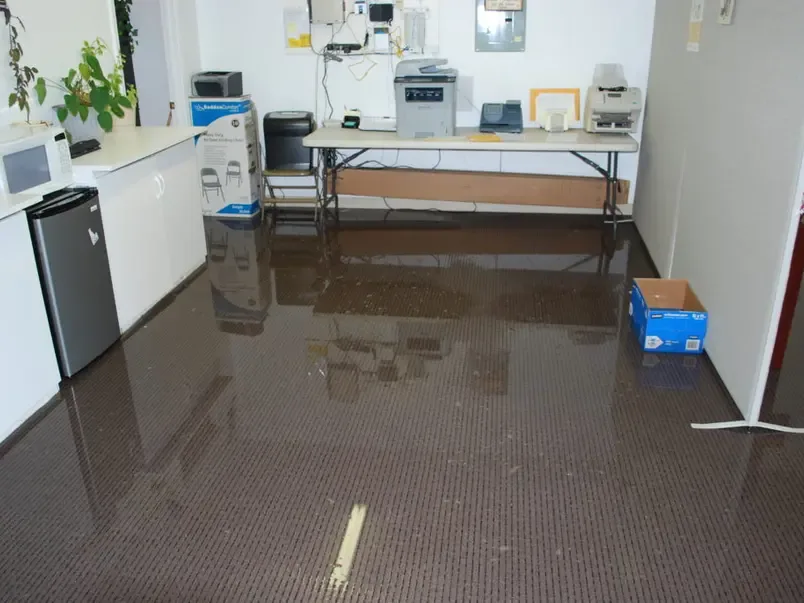
A commercial loss is measured in downtime as much as in damage. A failed supply pipe in a shared wall, a roof leak above a storefront or a backed up restroom can close a business for days if drying is not planned around it. The goal is to remove the water, protect inventory and get the space back in use.
How a commercial water damage job runs, step by step
Assess and zone
The crew finds the source and water category, maps the wet area and divides the building into zones for drying.
Extract and protect
Standing water is removed, inventory is protected and unaffected rooms are separated with containment sheeting so business can continue where possible.
Dry in phases
Air movers and dehumidifiers run zone by zone, with readings logged each visit so one space can reopen before another.
Report and release
Zone records go to the manager and insurer, and equipment leaves when each space meets its dry goal.
First steps for commercial water damage right now
- Stop the source: Close the shutoff valve or the main, and switch off power to wet areas if it is safe, so no new water spreads through the suite.
- Protect inventory and records: Lift stock, files and electronics onto dry shelves or carts, and cover what cannot be moved with plastic sheeting.
- Notify the right people: Tell the property manager, the landlord and the insurer, and keep staff and customers out of wet or sagging areas.
- Call for a drying plan: Give the square footage, the water source and the opening hours, so the crew can phase the work and bring the right extractors and dehumidifiers.
Water in the shop or office? Describe the space and the source and a local crew will explain how to protect inventory while the dry-out is planned.
Ask about the business dry-outBuildings across town
The downtown street grid is numbered and lettered, so water in one suite can reach the next. The university, the Davis Joint Unified School District and the Mondavi Center add larger institutional buildings with more floor area, more equipment and more people to keep informed. Each needs a plan scaled to its size.
A commercial dry-out plan usually covers:
- Containment so unaffected rooms stay open
- Drying schedules built around opening hours
- Inventory and equipment moved off wet floors
- Moisture logs and photos for the property manager
Phased drying and documentation
The crew first maps the wet area and the water category, then divides the building into zones. Each zone gets extraction, equipment and readings on its own schedule, so one suite can reopen while another keeps drying. Carpet tile is lifted and dried when it can be saved.
Leases often split responsibility between owners and tenants, so the crew keeps separate photos and readings for each space. Standing water is removed as described under water extraction, and drying follows the structural drying page. Contaminated water, such as a restroom overflow, is handled under sewage backup cleanup.
What to do right now
Shut off the water source and, if it is safe, power to the wet area. Move inventory, files and electronics off the floor and photograph the damage. Notify the property manager and the insurer, and keep staff out of wet or sagging areas. Then call for extraction and a drying plan.
Downtime costs more than water
Every day a suite stays closed is lost business, so the drying plan is built around opening hours, tenants and critical equipment. Keep customers and staff out of wet or sagging areas, and photograph inventory before it is moved so losses can be documented for the insurer. A written drying schedule helps tenants plan around the work.
What does commercial water damage cost in Davis, CA?
Commercial work runs from $3,000 to $8,000 for a single suite or shop up to $25,000 to $60,000+ for a multi-floor loss. Square footage, the water category and the schedule set the final figure.
Single suite or shop
- One tenant space affected
- Extraction and drying
- Photo records kept
Several suites
- Multiple tenants affected
- Phased drying zones
- Separate documentation
Multi-floor loss
- Several floors wet
- Large equipment run
- Coordinated scheduling
Ranges are typical, not a quote: water category, square footage, material class and how fast drying started move the number most. The water damage cost calculator gives a planning range for your own rooms.
Commercial claims and records
Business policies often distinguish between building coverage and contents or business interruption coverage, so tenants and owners may file separately. The crew keeps separate photos, readings and inventory notes for each space, which helps managers and insurers. The adjuster decides coverage; no outcome is promised. Separate invoices for each tenant space make the process simpler for everyone involved.
The claim file the drying team builds holds a moisture map of every wet room, daily psychrometric drying logs, timestamped photos taken before any demolition, the water category and class of loss, and a line-item scope an adjuster can check. Sudden and accidental water from a pipe or appliance is treated differently from flood water, which most homeowners policies leave to separate flood coverage. Coverage depends on your own policy, so it is worth checking with your insurer before anything is decided. Keep copies of the photos, the readings and every invoice together, because a complete file is what keeps a water claim moving.
How a water loss is handled here, start to finish
Rapid local response
Dispatch runs 24/7 and active water is treated as urgent at any hour, across Davis and the neighboring valley cities.
IICRC S500 drying standard
Truck-mounted extraction, LGR dehumidifiers and air movers sized to the class of loss, with readings logged at the same points every day.
Claim-ready documentation
Moisture maps, psychrometric logs and timestamped photos taken before any wet material is cut out, so the adjuster sees the whole loss.
Valley water experts
River-city levees, winter atmospheric river storms, older plumbing and newer subdivisions all shape how each dry-out is planned.
Commercial water damage across Davis and nearby communities
Crews work shops, offices, schools and multi unit buildings across the downtown grid, Mace Ranch, Westwood, Covell Park and the rest of the city, with 24/7 dispatch and drying schedules built around opening hours.
The same service nearby: commercial water damage in Sacramento, West Sacramento, Elk Grove.
Water damage restoration in Davis › Every town covered ›Related water damage services
Commercial Water Damage questions in Davis, CA
How is commercial water damage different from a home loss?
Buildings are larger, tenants and owners share responsibility, and downtime costs money. The crew divides the space into zones, protects inventory and plans drying around opening hours so part of the building can stay in use. Records for each space are kept separately.
Can a business stay open during water damage drying?
Often partly. Containment separates dry areas from wet ones, and drying is phased, so unaffected suites or rooms can stay open while wet zones are extracted and dried. Staff can use the open areas while work continues.
What happens to inventory and equipment?
It is lifted off wet floors, moved to dry areas and photographed before work begins. Items that cannot be moved are covered, and a list of affected stock helps with the insurance claim.
Who is responsible, the tenant or the owner?
That depends on the lease and the policies. The crew keeps separate photos, readings and notes for each space, so the owner, the tenant and the insurers can sort out responsibility. Early notice to the property manager helps.
Do schools and large buildings get the same service?
Yes, scaled up. Larger buildings need more extraction capacity, more dehumidification and a clear schedule so classrooms, labs or offices reopen in a planned order. Campus buildings and school sites are planned the same way.
How much does commercial water damage cost in Davis?
Prices run from $3,000 to $8,000 for a single suite or shop, $8,000 to $25,000 for several suites and $25,000 to $60,000+ for a multi-floor loss. A walkthrough sets the real number.
Does business insurance cover water damage drying?
Many commercial policies cover sudden water losses and may include business interruption. Keep photos, moisture logs, inventory notes and invoices together, and ask the adjuster which parts the policy covers. The adjuster decides what is covered.
What should a business do first after a water leak?
Stop the source, switch off power to wet areas if it is safe, lift inventory off the floor, photograph the damage and notify the property manager and insurer. Then call for extraction so the drying plan can be built around the business.
Get the building drying with minimal downtime
One call sets up extraction, phased drying and the zone by zone records that managers and insurers will request.
(888) 774-9605Call for the building