Slab Leak Water Damage in Rancho Cordova, CA
(888) 774-9605Chase down the hidden leak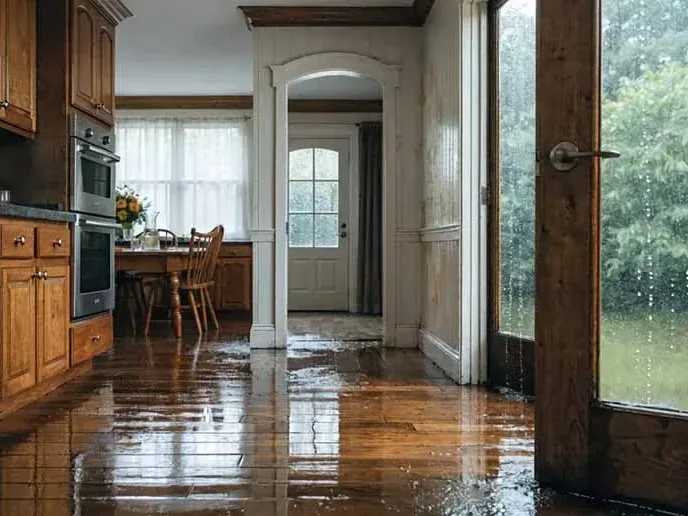
Slab leaks are a general concern for any home built on a concrete slab, and nothing here claims how many homes in the city sit on one. What matters is how the problem behaves. A supply pipe under the concrete leaks quietly, and the water finds the weakest path upward through cracks and joints, soaking carpet pad, wood flooring, baseboards and the bottoms of cabinets and walls long before anyone sees a puddle. The damage can be well advanced by the time a stain finally appears.
How a slab leak water damage job runs, step by step
Find the wet zone
Moisture meters and thermal imaging trace the water across the floor and into the base of the walls, marking each affected area.
Remove what cannot dry
Pad, laminate and soaked baseboards are taken out, while solid flooring and tile are tested to see whether they can stay.
Dry the slab and surfaces
Airflow and dehumidification run for several days, and readings are repeated so the concrete and finishes dry together.
Confirm and report
Final moisture readings and photos show the structure is dry, and the file is provided for the plumber, owner or adjuster.
First steps for slab leak water damage right now
- Confirm the signs: Check for damp or warm floor spots, running-water sounds with fixtures off, lifted flooring and unexplained water bills, then photograph what is visible.
- Shut the water off: Closing the main valve stops the leak from feeding the slab, and a plumber is called to locate and repair the pipe beneath the concrete.
- Map and extract: Meters and a thermal camera show where the water spread, and any standing water or soaked pad above the slab is removed.
- Dry above the slab: Air movers, dehumidifiers and specialty mats dry flooring, baseboards and lower walls until readings reach target levels.
Suspect water under the floor? Describe the damp spots, and a local pro will map the moisture and plan the dry-out.
Explain the floor dampnessHow slab leaks are noticed
Homeowners usually notice a floor that feels warm or damp, flooring that cups or lifts, a musty smell, the sound of water running when every fixture is off, or a water bill that climbs without explanation. Because water service here comes from a mix of providers, the account and meter information depends on the address, so checking the bill is a good first step before calling for help.
The response splits into two parallel jobs:
- A plumber locates and repairs the leaking pipe under the concrete
- A restoration crew maps, extracts and dries what the water reached
- Wet baseboards and lower drywall are opened so walls can dry
- Flooring is tested to decide what can stay and what must go
Drying above a slab
Concrete holds moisture for a long time, so drying a slab leak takes patience. Pad and flooring that sit directly on the slab are checked first, and materials that cannot dry are removed. Air movers push dry air across the surface while dehumidifiers pull moisture out of the room, and readings are repeated until the concrete and everything above it reach target levels.
Wood flooring is the most sensitive material, and specialty drying mats can draw water out of boards instead of replacing them. Tile floors often survive, though the grout and the setting bed beneath may hold water that needs more time.
Homes in the Villages of Zinfandel, Sunridge Park and around Cordova Village are approached the same way, with the readings deciding how long equipment stays.
Putting it together
Many slab leak jobs end with a structural drying plan that runs for several visits, and the burst pipe page covers the related case of a break inside a wall. The service hub lists every other service for local homes. Each job is sequenced so the plumber and the dry-out crew do not work against each other.
A warm or wet floor deserves a quick shutoff
A warm spot on the floor can point to a hot water pipe leaking under the concrete, and water can reach outlets and baseboards without any visible puddle. Close the main valve, keep power off to wet areas if it can be done safely from a dry spot, and avoid walking barefoot on damp floors.
What does slab leak water damage cost in Rancho Cordova, CA?
Slab leak costs depend on how long the water ran and how much flooring it reached. Catching it early keeps the job small, while a leak that ran for weeks can soak large floor areas and need more drying time and replacement.
Caught early
- Small wet area
- Light flooring impact
- Short drying period
Spread under flooring
- Water under wood or laminate
- Baseboards and lower walls opened
- Several monitoring visits
Long-running leak
- Large floor areas affected
- Heavy flooring removal
- Extended drying plan
Ranges are typical, not a quote: water category, square footage, material class and how fast drying started move the number most. The water damage cost calculator gives a planning range for your own rooms.
Slab leaks and the policy
Insurers often treat sudden water from a failed pipe differently from slow seepage, and the pipe repair itself may fall outside coverage even when resulting damage is covered. Moisture readings, photos of the affected floors and a record of when the leak was noticed help an adjuster decide. Check the policy, because nothing here promises a claim outcome. Keep the plumber's invoice and any water bills for the file.
The claim file the drying team builds holds a moisture map of every wet room, daily psychrometric drying logs, timestamped photos taken before any demolition, the water category and class of loss, and a line-item scope an adjuster can check. Sudden and accidental water from a pipe or appliance is treated differently from flood water, which most homeowners policies leave to separate flood coverage. Coverage depends on your own policy, so it is worth checking with your insurer before anything is decided. Keep copies of the photos, the readings and every invoice together, because a complete file is what keeps a water claim moving.
How a water loss is handled here, start to finish
Rapid local response
Dispatch runs 24/7 and active water is treated as urgent at any hour, across Rancho Cordova and the neighboring valley cities.
IICRC S500 drying standard
Truck-mounted extraction, LGR dehumidifiers and air movers sized to the class of loss, with readings logged at the same points every day.
Claim-ready documentation
Moisture maps, psychrometric logs and timestamped photos taken before any wet material is cut out, so the adjuster sees the whole loss.
Valley water experts
River-city levees, winter atmospheric river storms, older plumbing and newer subdivisions all shape how each dry-out is planned.
Slab leak water damage across Rancho Cordova and nearby communities
Slab leak work covers the Villages of Zinfandel, Sunridge Anatolia, Sunridge Park, Cordova Village and homes along Zinfandel Drive and White Rock Road, with dispatch available around the clock for properties across Rancho Cordova.
The same service nearby: slab leak water damage in Sacramento, Citrus Heights, Elk Grove.
Water damage restoration in Rancho Cordova › Every town covered ›Related water damage services
Slab Leak Water Damage questions in Rancho Cordova, CA
What is a slab leak in simple terms?
It is a leak in a water supply pipe that runs beneath or inside a concrete slab floor. The water travels up through cracks and joints and soaks flooring, pad and walls, often without any visible puddle. Acting on the first sign limits the damage.
How can a slab leak be spotted early?
Warm or damp floor spots, flooring that lifts or cups, the sound of running water when fixtures are off and an unexplained rise in the water bill are the usual signs. Any of them is worth a moisture check.
Does the restoration crew fix the leaking pipe?
No. A plumber locates and repairs the pipe, while the restoration crew extracts the water and dries the structure. The two jobs run side by side, and coordinating them keeps the repaired plumbing from being sealed in over wet materials.
Can wood flooring be saved after a slab leak?
Sometimes. Boards that have not warped badly can be dried with specialty mats and airflow, while cupped or buckled sections are usually replaced. Meters and visual checks decide, and the earlier the leak is caught, the better the odds. Mats can pull water out of boards that would otherwise cup.
How long does it take to dry a slab?
Concrete holds moisture for a long time, so drying can take several visits. Readings set the schedule, and equipment stays until the slab and the materials above it reach dry goals, not for a fixed number of days.
Does a slab leak always mean tearing up the floor?
Not always. Pad, laminate and soaked baseboards are removed when needed, but tile and solid flooring can often be tested and dried in place. The repair plumber may need access to the pipe, which is a separate question.
Should the main water be shut off during a suspected slab leak?
Yes. Closing the main valve stops the leak from feeding the slab and limits further damage. It also lets the plumber confirm the leak, and the restoration crew can then begin extracting and drying.
Find and dry the hidden water
Dispatch runs 24/7, and one call sets up moisture mapping, extraction and a drying plan alongside the pipe repair.
(888) 774-9605Call about the floor