Slab Leak Water Damage in Davis, CA
(888) 774-9605Find where the floor is wet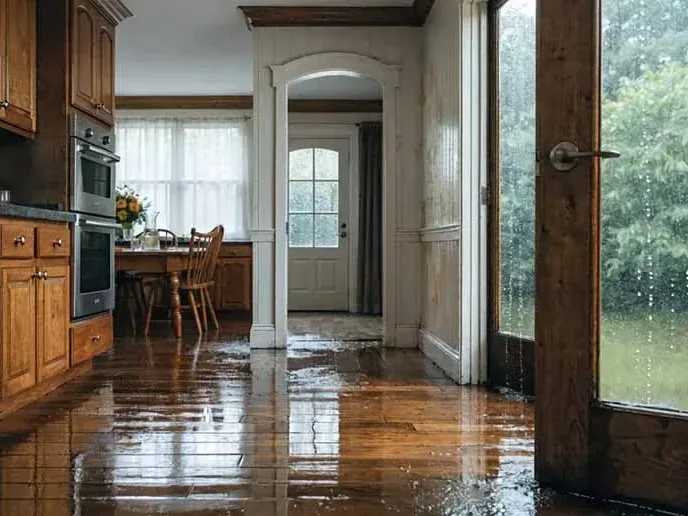
A slab leak starts in a pipe that runs under or inside the concrete floor of a house, and it is hard to spot because the water travels up and out rather than pooling on the surface. More than half of Davis residents lived in rental housing in 2010, and in a rental the leak may run for weeks before a tenant or an owner connects a damp corner to a pipe. The method below applies to any home built on a concrete slab.
How a slab leak water damage job runs, step by step
Map the moisture
Meters and a thermal camera trace the wet area under flooring and in lower walls, and the findings are marked on a simple floor sketch.
Coordinate the repair
The plumber isolates and repairs the supply pipe, and drying is timed so flooring is not covered or rebuilt while still damp.
Dry in place
Carpet is lifted if needed, hard floors get drying mats or panels, and air movers and dehumidifiers pull moisture from walls and trim.
Verify with readings
Readings are checked at the slab edge and in the walls each day, and the job closes only when they match dry reference points.
First steps for slab leak water damage right now
- Shut off the main valve: Close the main water valve and watch the meter. If it keeps turning with every fixture off, water is leaking somewhere hidden, and a plumber should locate it.
- Document the damage: Photograph damp flooring, swollen baseboards and stained walls, and keep recent water bills, since a rise in use shows how long the leak may have run.
- Notify the property manager: Renters should report the leak in writing before anyone starts work, so the owner, the plumber and the crew can coordinate access to the unit.
- Call for moisture mapping: Describe the warm spots and damp rooms, so the crew brings meters, a thermal camera and drying equipment sized for flooring and lower walls.
Suspect water under the floor? Describe the warm spots or damp carpet and a local crew will explain how to map the moisture and protect the flooring.
Trace the floor moistureHow a long running leak shows itself
The signs are easy to miss: a warm patch on the floor, carpet that stays damp, baseboards that swell, paint that bubbles low on a wall or a water bill that creeps up with no obvious cause. Tenants in Olive Drive, Aggie Village and the lettered streets of East Davis may notice an odor before the damage, and a report to the property manager should come first. Early reports keep the repair, and the drying, smaller.
Watch for these warning signs:
- A warm or damp spot on the floor with no clear cause
- Baseboards or flooring that cup, swell or lift
- The sound of running water while every fixture is off
- A water bill that rises without a change in use
Drying around a slab leak
Once a plumber has isolated the leak, moisture meters and a thermal camera map how far the water traveled under flooring and into lower walls. Wet carpet and pad are lifted, and hard floors are dried with panels or mats that pull moisture from underneath where the material allows.
Baseboards come off, small holes may be drilled to move air behind drywall, and dehumidifiers run until readings match dry reference points. The method follows the structural drying page, with extra readings taken at the slab edge to confirm the concrete is releasing moisture.
If the leak ran long enough to reach cabinets or a neighboring unit, the scope grows. A leak from a pipe inside a wall follows a different path and is covered under burst pipe water damage.
What to do when a slab leak is suspected
Shut off the main water valve and check whether the meter keeps moving, which points to a hidden leak. Photograph damp flooring, stained baseboards and any bills that show rising use. Move furniture and belongings off wet carpet, and notify the property manager if the home is a rental. A plumber confirms the leak and repairs the pipe, and the restoration crew dries around that schedule so flooring is not covered over while still damp.
A hidden leak keeps getting worse
Water under flooring keeps soaking baseboards, cabinet bases and drywall every hour the pipe runs, and it can travel into the unit next door. If the floor feels warm, the meter keeps moving or the carpet stays damp, treat it as an active leak. Shut off the main valve and call a plumber and the crew together. Waiting only enlarges the wet zone.
What does slab leak water damage cost in Davis, CA?
Slab leak drying runs from $1,800 to $3,000 when the leak is caught early up to $6,500 to $12,000+ for a long running leak. The area under flooring and the materials removed set the final figure.
Caught early
- One room affected
- Flooring dried in place
- Short equipment run
Spread under flooring
- Several rooms wet
- Baseboards and trim off
- Daily moisture readings
Long-running leak
- Cabinets and walls wet
- Flooring replaced
- Neighbor unit checked
Ranges are typical, not a quote: water category, square footage, material class and how fast drying started move the number most. The water damage cost calculator gives a planning range for your own rooms.
Slab leaks and claims
Many policies treat a sudden pipe failure differently from a leak that ran slowly for months, and the cost of reaching a pipe under concrete is often handled separately from the water damage. The crew records moisture readings, photos and the dates of each visit, and the plumber's report completes the file. Coverage is decided by the policy, and no outcome is promised. Keep every water bill from the months before the leak was found.
The claim file the drying team builds holds a moisture map of every wet room, daily psychrometric drying logs, timestamped photos taken before any demolition, the water category and class of loss, and a line-item scope an adjuster can check. Sudden and accidental water from a pipe or appliance is treated differently from flood water, which most homeowners policies leave to separate flood coverage. Coverage depends on your own policy, so it is worth checking with your insurer before anything is decided. Keep copies of the photos, the readings and every invoice together, because a complete file is what keeps a water claim moving.
How a water loss is handled here, start to finish
Rapid local response
Dispatch runs 24/7 and active water is treated as urgent at any hour, across Davis and the neighboring valley cities.
IICRC S500 drying standard
Truck-mounted extraction, LGR dehumidifiers and air movers sized to the class of loss, with readings logged at the same points every day.
Claim-ready documentation
Moisture maps, psychrometric logs and timestamped photos taken before any wet material is cut out, so the adjuster sees the whole loss.
Valley water experts
River-city levees, winter atmospheric river storms, older plumbing and newer subdivisions all shape how each dry-out is planned.
Slab leak water damage across Davis and nearby communities
Crews handle slab leaks in Westwood, Evergreen, Aspen, Stonegate, Mace Ranch, Wildhorse, Covell Park and the other neighborhoods across the city, with 24/7 dispatch and clear records for owners, tenants and property managers. Rentals and owner occupied homes receive the same method.
The same service nearby: slab leak water damage in Sacramento, West Sacramento, Elk Grove.
Water damage restoration in Davis › Every town covered ›Related water damage services
Slab Leak Water Damage questions in Davis, CA
What is a slab leak and why does it cause water damage?
A slab leak is a break in a supply pipe running under or inside a concrete floor. The water has nowhere to pool, so it rises into flooring, baseboards and lower walls and keeps soaking them for as long as the pipe runs.
How do I know whether I have a slab leak?
Warm spots on the floor, damp carpet, swollen baseboards and a water meter that keeps moving with everything off are the usual clues. A plumber confirms the leak, and moisture mapping shows how far the water reached.
Why can a slab leak run for weeks in a rental?
Tenants may not connect a damp corner to a pipe, and reports can take time to reach the owner. More than half of residents lived in rental housing in 2010, so shared responsibility for noticing a leak is common.
Can flooring be saved after a slab leak?
Often yes if the leak is caught early. Hard floors can be dried in place with mats and airflow, while carpet pad is usually removed. Flooring that has cupped or delaminated is typically replaced after drying. Cabinet bases and trim are checked as well.
Does the plumber or the restoration crew come first?
Both are needed. The plumber stops the leak and repairs the pipe, and the crew dries the structure. The two are scheduled together so flooring is not rebuilt over damp concrete or walls. Skipping that coordination is how damp concrete ends up under new floors.
How much does slab leak water damage cost in Davis?
Prices run from $1,800 to $3,000 when the leak is caught early, $3,000 to $6,500 once it has spread under flooring and $6,500 to $12,000+ for a long running leak. A walkthrough sets the number.
Will insurance cover a slab leak?
It depends on the policy and on whether the leak was sudden or gradual. Keep water bills, photos, the plumber's report and the drying records together, and ask the adjuster what the policy covers.
Dry the floor while the pipe is repaired
One call arranges moisture mapping, flooring drying and the records your plumber, landlord and adjuster will each ask for.
(888) 774-9605Call about the floor