Ceiling Leak Water Damage in Davis, CA
(888) 774-9605Get the ceiling checked and dried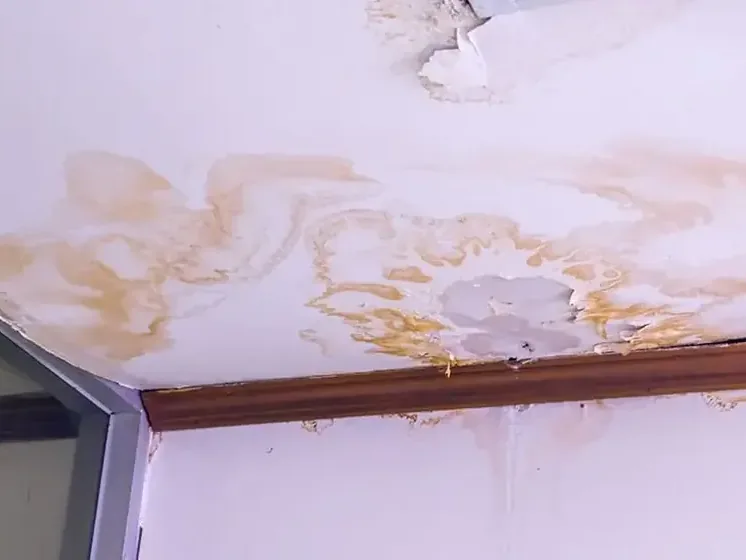
A wet ceiling is a delayed message. The water came from somewhere above, collected in insulation or on the back of the drywall, and finally broke through as a stain or a drip. In this part of the Sacramento Valley, rain falls mostly between mid-November and mid-March, with typically none from mid-June to mid-September, so the first big storm after a dry summer is when ceiling leaks tend to appear.
How a ceiling leak water damage job runs, step by step
Relieve the water
Trapped water is released with a small opening and collected, which prevents a sudden collapse of the drywall.
Open and trace
Saturated drywall and insulation are cut out, and meters and a thermal camera trace the wet area back toward its source.
Dry the cavity
Air movers and dehumidifiers dry the framing and remaining drywall, and moisture readings are logged each day.
Confirm the dry goal
Readings are compared with dry reference points, and photos and logs are provided for the repair contractor and adjuster.
First steps for ceiling leak water damage right now
- Protect the room: Move furniture, rugs and electronics out from under the stain, and set buckets or plastic sheeting below any active drip.
- Stay clear of sagging areas: A bulging ceiling can drop without warning, so keep people out of the room and do not poke or push on the bulge from below.
- Photograph the stains: Take dated photos of the ceiling, the walls and any drips, and note when the last rain or plumbing use happened.
- Call for an inspection: Describe the stain size and whether the water is still coming, so the crew brings ladders, meters and drying equipment for the ceiling and attic.
Ceiling stained or sagging? Describe it and a local crew will explain how to protect the room and what to expect from the dry-out.
Have the wet ceiling inspectedWhere ceiling water comes from
The source may be a roof leak, a failed pipe fitting, an overflowing tub above, an HVAC condensate pan or a neighbor's appliance. Whether a home is in Westwood or Mace Ranch, the path often runs through the attic when there is one, while multi unit buildings add the chance of a leak from the unit above. Finding the source decides who repairs it and who files the claim.
Signs to act on:
- Yellow or brown stains that grow after rain
- Paint bubbling or peeling on the ceiling
- A sagging or soft section of drywall
- Drips from a light fixture or vent
Relieving and drying the ceiling
A sagging ceiling holds a pocket of water, so a small hole is drilled to release it into a bucket before the drywall fails. The crew then cuts out saturated sections, removes wet insulation and uses a thermal camera and meters to find the edges of the damage.
Air movers and dehumidifiers dry the framing and the remaining drywall, and readings are logged until they match dry material. If the water entered through the roof, roof leak water damage explains that dry-out, and a plumbing source is covered under burst pipe water damage.
What to do right now
Never stand under a bulging ceiling. Move furniture and belongings away, set out buckets and photograph the stains. If water is dripping near a light fixture, switch off the circuit at the panel and keep the room closed until the water is cleared. Then call for an inspection and drying plan.
Do not wait for a stain to grow
A small ceiling stain can be the visible tip of a much wetter cavity. Water sitting on insulation keeps spreading sideways, and a sagging section holds far more weight than it looks like. Keep people out from under any bulge, and call before the drywall gives way and brings insulation and water down into the room.
What does ceiling leak water damage cost in Davis, CA?
Ceiling leak work runs from $1,000 to $2,000 for a small stain up to $5,000 to $10,000+ for a unit below or a long leak. The size of the wet cavity and the materials removed set the final figure.
Small stain
- One ceiling section
- Cavity opened
- Short drying run
Room-sized ceiling
- Ceiling and insulation cut
- Walls checked
- Daily readings
Unit below or long leak
- Several rooms wet
- Larger tear out
- Rebuild planning
Ranges are typical, not a quote: water category, square footage, material class and how fast drying started move the number most. The water damage cost calculator gives a planning range for your own rooms.
Ceiling leaks and claims
Coverage often turns on the source. A sudden pipe failure or storm opening may be covered, while a leak from long term wear or neglected roofing may not. The crew records where the water entered, photographs the stains and logs drying, and the adjuster decides what the policy covers; no outcome is promised. Keep any roofer or plumber report with the photos, because the adjuster will want to know exactly where the water entered.
The claim file the drying team builds holds a moisture map of every wet room, daily psychrometric drying logs, timestamped photos taken before any demolition, the water category and class of loss, and a line-item scope an adjuster can check. Sudden and accidental water from a pipe or appliance is treated differently from flood water, which most homeowners policies leave to separate flood coverage. Coverage depends on your own policy, so it is worth checking with your insurer before anything is decided. Keep copies of the photos, the readings and every invoice together, because a complete file is what keeps a water claim moving.
How a water loss is handled here, start to finish
Rapid local response
Dispatch runs 24/7 and active water is treated as urgent at any hour, across Davis and the neighboring valley cities.
IICRC S500 drying standard
Truck-mounted extraction, LGR dehumidifiers and air movers sized to the class of loss, with readings logged at the same points every day.
Claim-ready documentation
Moisture maps, psychrometric logs and timestamped photos taken before any wet material is cut out, so the adjuster sees the whole loss.
Valley water experts
River-city levees, winter atmospheric river storms, older plumbing and newer subdivisions all shape how each dry-out is planned.
Ceiling leak water damage across Davis and nearby communities
Crews respond to ceiling leaks in Westwood, Evergreen, Aspen, Stonegate, Mace Ranch, Lake Alhambra Estates, Wildhorse and the other neighborhoods across the city, with 24/7 dispatch whenever a storm opens a new leak. Rentals and owner occupied homes get the same method.
The same service nearby: ceiling leak water damage in Sacramento, West Sacramento, Elk Grove.
Water damage restoration in Davis › Every town covered ›Related water damage services
Ceiling Leak Water Damage questions in Davis, CA
Why does a ceiling leak often appear after the first storm?
Dry months leave roof flashing, seals and shingles to age without testing. Rain falls mostly from mid-November to mid-March, so the first heavy storm after a dry summer is often when a weak spot finally lets water in. A roof check before November is a sensible habit.
Is a sagging ceiling dangerous?
Yes. Wet drywall and insulation are heavy, and the section can drop without warning. Keep people out from under it, move belongings away and have a crew release the water in a controlled way. Wet insulation adds weight beyond the drywall itself.
How can I tell whether the leak is from the roof or plumbing?
Roof leaks tend to appear or grow during and after rain, while plumbing leaks show up when a fixture or appliance above is used. Moisture meters and a thermal camera help trace the path back to the source.
Does the whole ceiling have to be replaced?
Not always. Crews cut out only the saturated sections and wet insulation, then dry the framing. Small, clean water stains caught early can sometimes be dried in place without removing much drywall. Texture and paint are matched by the repair contractor afterward.
What about a ceiling leak from the apartment above?
Tell the property manager right away and photograph everything. The source unit may need its own repair and drying, and records from both units help the owners and insurers sort out responsibility. The crew can also dry the unit below the leak.
How much does ceiling leak water damage cost in Davis?
Prices run from $1,000 to $2,000 for a small stain, $2,000 to $5,000 for a room-sized ceiling and $5,000 to $10,000+ for a unit below or a long leak. A walkthrough sets the number.
Will insurance cover a ceiling leak?
It depends on the source and the policy. Sudden events are often covered, while wear and neglected maintenance may not be. Keep photos, repair invoices and drying logs together for the adjuster.
Does a small ceiling stain need professional drying?
Often yes. A stain is only the visible edge, and insulation above can hold water for a long time. Moisture readings show whether the cavity is still wet, and drying it early prevents bigger damage and repeat staining.
Get the ceiling opened and dried
One call sets up water release, drywall removal, cavity drying and the photo record that the adjuster and roofer will ask for.
(888) 774-9605Call before it gives way