West Sacramento sits in Yolo County, across the river from the state capital, and the storms that pass through the region can be strong. Atmospheric rivers hit the area in January 2017 and again in January 2023. This post explains what an owner does when that kind of storm lets water in at the roof.
Key takeaways
- Protect belongings first, then document the damage before moving anything.
- A temporary tarp or sealant is a job for a roofer, not a drying crew.
- Wet attic insulation and ceiling drywall are removed because they stay wet.
- Drying covers the attic, ceiling cavity and any wall the water ran down.
- Photos and dates support any claim; keep removed material until it is reviewed.
Storms that tested local roofs
A series of atmospheric rivers hit the Sacramento area from January 3 to January 24, 2017. In January 2023 atmospheric rivers brought heavy flooding to the area, with winds above 60 mph and more than 22,000 California customers losing power.
These were regional events and are not described here as West Sacramento specific. They do show the kind of weather that finds weak spots in a roof.
Where water gets in
Storm leaks tend to show up at the same few places, and knowing them helps an owner explain the problem to a roofer.
- Flashing around chimneys and vents.
- Roof valleys where two slopes meet.
- Missing or lifted shingles after wind.
- Plumbing vent boots that have cracked.
- Skylights and their seals.
Steps while the rain is still falling
Safety first. A wet roof is not a place to climb, and a wet ceiling can hold a lot of weight.
- Move furniture and electronics away from the stain.
- Set buckets under drips and a tarp over larger items.
- Turn off any light fixture that is wet.
- Photograph the ceiling, the attic if it can be reached safely, and any water on floors.
- Call a roofer for a temporary cover when conditions allow.
A sagging ceiling
A ceiling that sags is holding water. Stand to one side, and relieve it with a small hole at the lowest point over a bucket.
Eye protection is a good idea.
What the cleanup removes
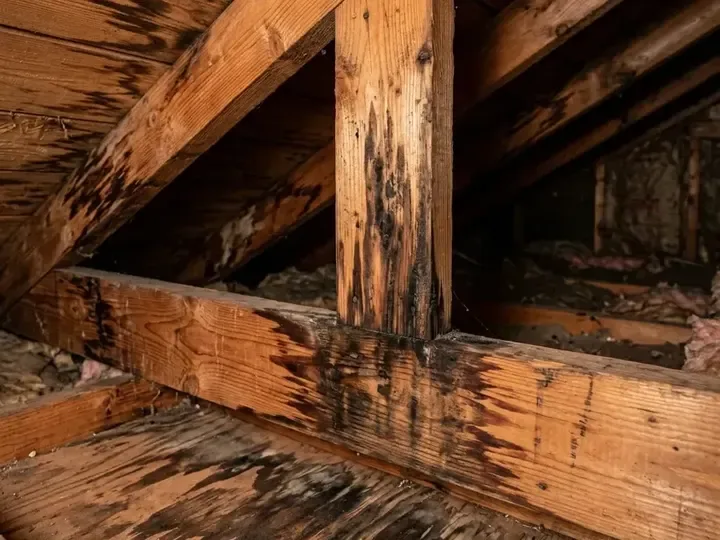
Roof leak water damage work starts with the attic. Wet insulation is pulled, since it holds water and rots slowly in place.
Then the ceiling below is addressed. Soaked drywall comes down in sections, and the joist bays are opened so they can dry.
- Wet attic insulation.
- Stained or sagging ceiling drywall.
- Wet carpet or flooring under the leak.
- Damp wall sections where water ran down inside.
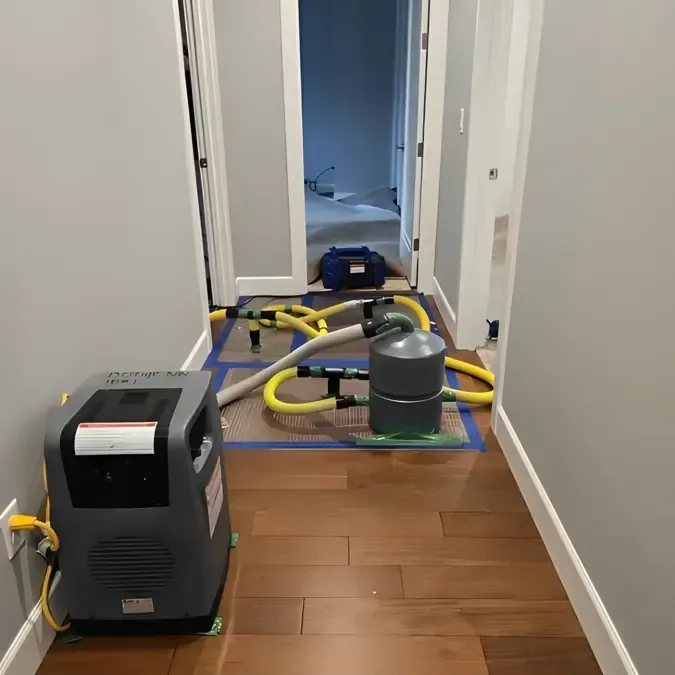
Drying the structure
After removal, air movers and dehumidifiers run until readings in the framing are dry. The ceiling leak page covers that part of the process for the rooms below.
The attic needs air movement too. Roof decking that stays damp can cause trouble later, so readings are checked there as well.
Why speed matters
The longer insulation and drywall stay wet, the more of the structure they touch. Starting drying promptly limits the area that has to be repaired.
Living in the Yolo County side of the river
West Sacramento grew from three towns, Broderick, Bryte and West Sacramento, plus the Southport area, which makes up about half of the city's land area. Homes in each part follow the same cleanup steps after a roof leak.
The town hub lists every water service available here, and the main roof leak page shows typical scope and price ranges.
Tarps and temporary protection
A tarp over a damaged section buys time. It should be installed by a roofer or by someone trained to work at height, since wet roofs are slippery.
Inside the home, plastic sheeting over furniture and a clear path for buckets help until the permanent repair is done.
- Choose a tarp large enough to extend past the damaged area on every side.
- Secure it so wind cannot lift it.
- Never walk on a wet roof for a quick patch.
- Keep receipts for emergency repairs.
Attic insulation and ventilation
Insulation in the attic acts like a sponge. It holds water against the ceiling drywall and the roof deck long after the rain stops.
Removing wet insulation also lets air reach the framing. Later, new insulation goes in over dry framing, with vents left clear so the attic can breathe.
Who does what
A roofer, a drying crew and sometimes a painter each handle part of the recovery. Keeping their roles clear avoids gaps.
- Roofer: temporary cover and permanent roof repair.
- Drying crew: wet removal, extraction and drying with meter readings.
- Contractor or painter: drywall, texture and paint once framing is dry.
- Owner: photos, a timeline and the insurer conversation.
Common mistakes after a storm leak
A few repeat errors turn a small leak into a bigger loss. Knowing them helps owners avoid them.
- Painting over a stain before the cavity is dry.
- Leaving wet insulation in the attic for weeks.
- Skipping photographs because the stain looks small.
- Climbing a wet roof to look for the leak.
- Waiting for the next storm to see if the leak returns.
Following up after the next rain
After repairs, check the ceiling and attic during the next rain. A dry check is reassuring; any new stain is a reason to call the roofer again.
Preparing before the next big storm
Atmospheric river storms arrive with some warning. A short check of the roof and attic beforehand can catch weak points early.
Owners can look at flashing, vent boots and shingles from the ground, clear gutters, and make sure buckets and tarps are easy to find.
- Look for lifted or missing shingles after wind.
- Clear gutters and downspouts so water drains away from the house.
- Check the attic ceiling for stains after each major storm.
- Keep a flashlight and a small tarp where they can be reached quickly.
Documenting for the roof and the interior
Two repairs are involved: the roof itself and the interior. Keeping the records separate makes each one easier to handle.
Photos of the roof damage, the attic and the ceiling, along with dates and any weather notes, are useful for both.
- Roof photos taken from the ground or by the roofer.
- Attic photos of wet insulation and decking.
- Ceiling photos before and after opening.
- Receipts for tarps, buckets and temporary repairs.
Questions
Is a roof leak a drying crew job or a roofer job?
Both. The roofer stops water entering, and the drying crew removes wet materials and dries the structure. The roof fix should come first or at least happen soon after.
Should attic insulation be saved?
Wet insulation is usually removed because it holds water against the roof and ceiling. Dry sections nearby can stay.
How can an owner tell how far water spread?
A moisture meter and a thermal camera show wet areas that look dry. That is why readings direct the work rather than appearance.
Was West Sacramento itself flooded in these storms?
This post does not claim that. The storms are described as regional Sacramento area events. The cleanup steps here apply to any roof leak after heavy rain.