A water main break is a utility problem first, but its water often ends up on private property. Elk Grove has seen it: a break near Elk Grove Boulevard and Laguna Springs Drive in January 2018 flooded streets, and police went door to door checking whether water had entered homes. This post covers what an owner checks afterward.
Key takeaways
- Check the garage, door thresholds and low rooms first, since water follows the lowest path.
- Street water after a main break may carry silt and debris, so treat standing water with care.
- Photograph any water that crossed onto the property before cleaning up.
- Extraction is the first job; drying follows once standing water is gone.
- Report the break to the utility and keep a note of what was damaged.
What happened in January 2018
On January 24, 2018, a water main near Elk Grove Boulevard and Laguna Springs Drive broke and flooded streets, including Snowy Springs Circle. Afterward, police went door to door to check whether water had entered homes, and part of Elk Grove Boulevard stayed closed.
An earlier break shows the pattern: on June 25, 2013, a water main on Franklin Boulevard broke and a section of that road closed.
Where water usually goes first
Street water follows slope, curb lines and driveways. It reaches the lowest openings on a lot before it reaches anything else.
A short walk around the property after the break stops shows where water has gone.
- Garage floors and the bottom of garage doors.
- Front and back door thresholds.
- Window wells or low vents on the exterior.
- Flower beds and soil that slope toward the foundation.
- Any room with a lower floor than the rest of the house.
Checking inside
Once the outside is checked, the inside gets the same look. Water that crossed a threshold can soak baseboards and flooring before anything is visible.
- Press on carpet near doors to feel for dampness.
- Look for darkening at the bottom of drywall.
- Check cabinets that sit against an exterior wall.
- Look at stored boxes in the garage for wicking.
Signs that water got in
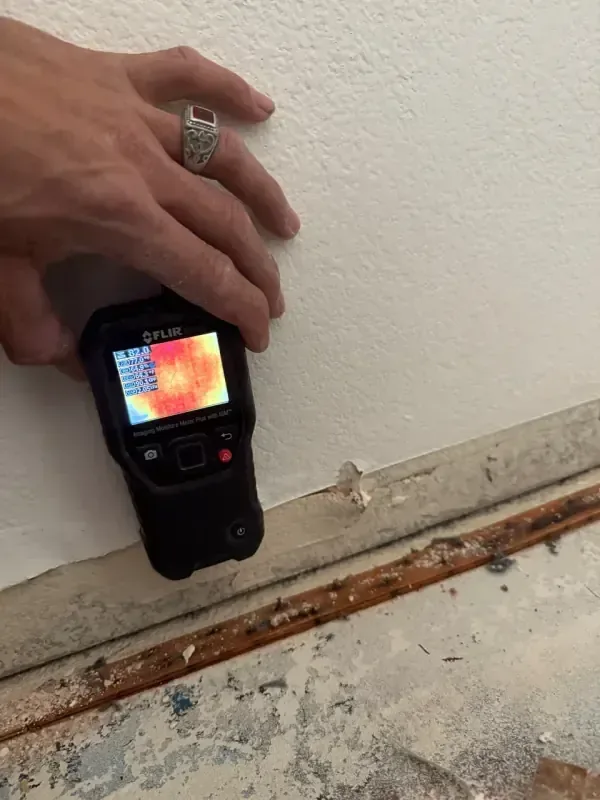
A musty smell, soft baseboards or a floor that feels cooler than nearby areas can point to moisture. Moisture meters confirm what the hand suspects.
What if the house looks fine
Clean looking floors can still hide wet padding. A meter check is quick and settles the question.
Extraction and what comes after
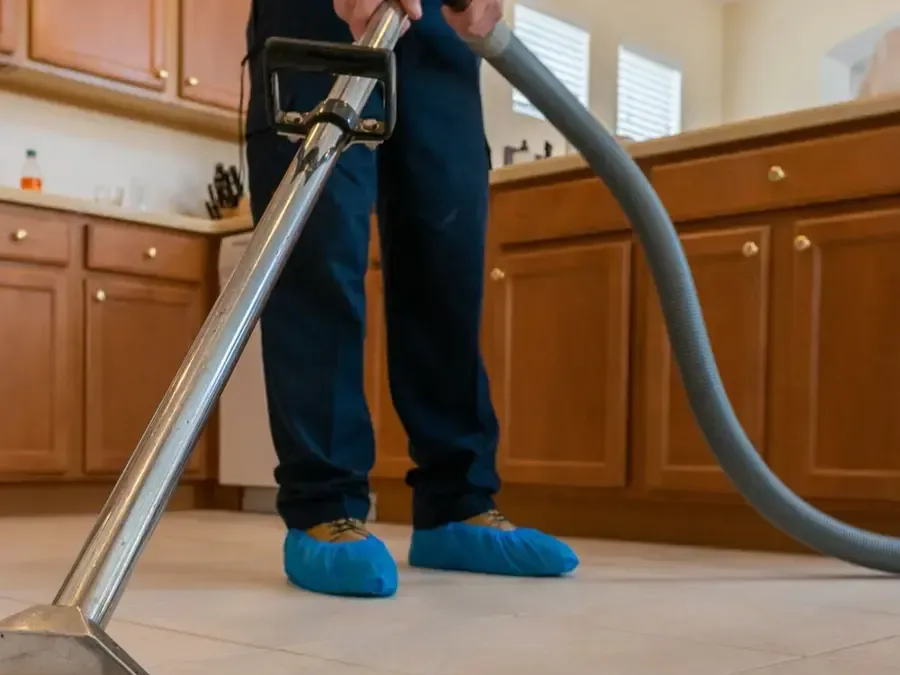
When standing water is present, water extraction is the first move. Pumps and wet vacuums pull the bulk water out so it cannot soak further into pad and drywall.
If the water carried street debris or silt into the house, the job moves toward flood water cleanup, which adds washing and surface treatment.
- Standing water removed first.
- Wet padding or low drywall removed if it cannot dry in place.
- Surfaces cleaned where debris or silt came in.
- Air movers and dehumidifiers set after the bulk water is gone.
Winter timing in Elk Grove
Elk Grove averages about 18.59 inches of rain a year. January averages 3.5 inches, February 3.38 and March 2.88, while June through August bring almost no rain.
A main break in winter can land on ground that is already wet, which slows natural drainage and adds to the volume around a house.
Yard, grading and the foundation edge
Water that stopped at the foundation can still matter. Saturated soil next to the house keeps pushing moisture toward low openings for a while after the street is dry.
A walk around the exterior shows whether mulch, planter edges or soil slope toward the house.
- Look for soil washed out along the foundation.
- Check that downspouts still drain away from the house.
- Clear leaves and debris from drains and gutters.
- Keep an eye on interior walls that share an exterior corner.
- Re-check low rooms the next day for new dampness.
Reporting the break and keeping records
A break on a public street is reported to the utility that runs the main. The retail water provider depends on the address, so check a bill or the city website before calling.
Owners should also tell their insurer if water got inside. Policy terms vary, so this post does not describe coverage.
- Date and rough time the water was first seen.
- Photos of the street, the path to the house and the damage.
- A list of items that got wet.
- Names or badge numbers for any official who visited.
Mistakes to avoid
Most added damage comes from waiting too long or from fixes that only look finished.
- Pushing water around with a broom instead of removing it.
- Leaving wet cardboard boxes on the garage floor.
- Turning on heat to dry the house without checking meters.
- Closing up a wall before it has been checked.
- Assuming the house is dry because the carpet feels fine.
When to call for extraction
A thin film of water that a towel can pick up is not the same as a soaked carpet. The difference between a quick cleanup and a job for a crew is whether water has reached padding, baseboards or the bottom of walls.
If there is any doubt, a meter check settles it quickly and avoids a hidden problem later.
- Carpet squishes underfoot.
- Baseboards feel soft or look darker.
- Water stands in more than one room.
- The garage floor is wet and boxes are damp.
- A damp smell lingers after the surface looks dry.
Records and next steps
Take photos of the street water, the path it took and any damage inside. Write down when it started and when it stopped.
Additional help is on the town hub, which lists every water service for the area. For a broader look at how extraction is scoped, the main service page shows typical work and price ranges.
- Photos with the street and house both in frame where possible.
- A short timeline of events.
- A list of damaged items.
- Any notice from the utility or the city.
Questions
Is water from a main break dirty?
It can pick up silt, leaves and debris as it crosses streets and yards, so standing water inside a house is handled with care. A crew can test the situation and decide how much cleaning is needed.
What if water only reached the garage?
A garage slab can usually be dried quickly, but stored boxes and drywall at the bottom of the wall may soak up water. A meter check shows whether more work is needed.
Do police check homes after every break?
No. That happened after the January 2018 break near Laguna Springs Drive. An owner should check their own property rather than wait for a visit.
When is drying equipment needed?
Equipment is needed when meters show wet materials after standing water is removed. If everything reads dry, no drying equipment is needed.
Should an owner wait for the utility before cleaning up?
The utility fixes the main. Owners can document and start removing water from inside the house while that happens, as long as the area is safe to enter.