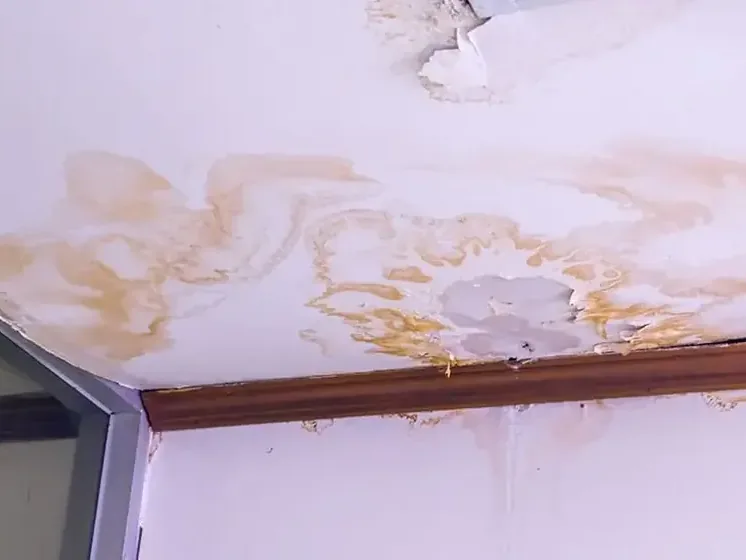
In Rancho Cordova, 43.6% of occupied homes are rented, and new single family and multifamily homes keep going up on Zinfandel Drive. That means many ceiling stains come from a space the tenant does not control. This post covers who to tell, how a wet ceiling is handled safely, and how the cavity is dried.
Key takeaways
- Do not poke or puncture a sagging ceiling without a plan for where the water will go.
- Report the stain in writing to the landlord or building manager right away.
- The source may be in the unit above, an attic space or a shared pipe.
- A wet ceiling is opened in a controlled way and the cavity is dried before repairs.
- Photos and dates make later conversations about cost much simpler.
Why ceiling leaks often start somewhere else
The 2020 Census counted 28,614 housing units in the city, 96.9% occupied. Of occupied units, 56.4% are owner occupied and 43.6% are rented.
A tenant who sees a stain may have no access to the pipe, appliance or roof that caused it. The first job is to describe the stain clearly and get it to the person who can open the source.
What to do when the ceiling shows water
A brown stain, a bubble in paint or drips from a fixture all signal water above. Some of these signs are slow, others are sudden.
- Move furniture, electronics and rugs away from the spot.
- Place a bucket under active drips and a tarp over larger items.
- Turn off the light fixture at the switch if water is near it.
- Take photos of the stain and the surrounding ceiling.
- Note the time and date the stain was first seen.
A bulging ceiling
A ceiling that bulges is holding water. A small controlled hole at the lowest point lets it drain into a bucket, which can prevent the whole section from collapsing.
Stand to the side, not under the bulge, and wear eye protection.
Finding the source
A leak can come from an upstairs bathroom, a supply pipe, a drain, an air conditioner drain, or the roof. Rain in Rancho Cordova totals about 18.14 inches a year, mostly between December and March, so a stain that appears during or right after a storm points toward the roof.
A stain that appears on a dry day points toward plumbing or an appliance in the unit above.
- Stain appears only after rain: roof or flashing.
- Stain appears when the unit above runs water: supply or drain pipe.
- Stain grows slowly without any link to rain or use: a pinhole leak.
- Stain near a bathroom wall: tub, shower or toilet seal.
Opening and drying the ceiling
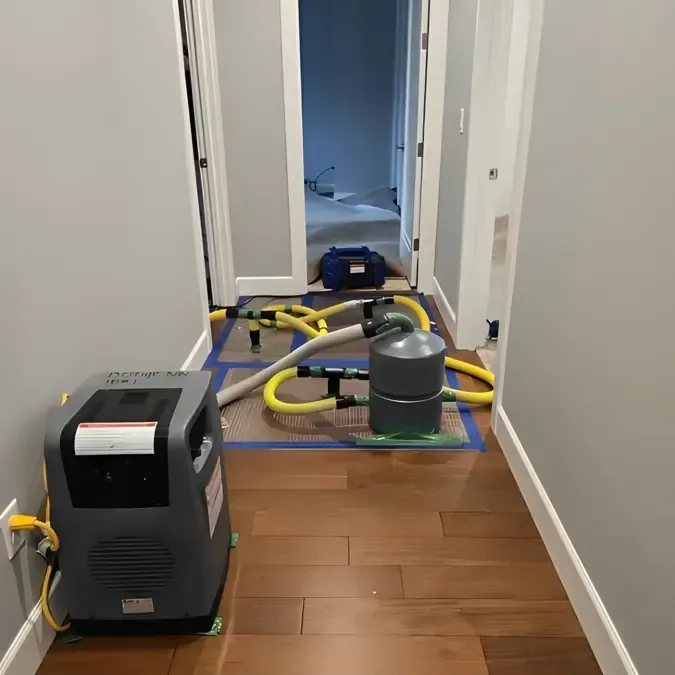
A wet ceiling is cut open in a controlled way so the cavity can be inspected. Ceiling leak water damage work starts with extraction of any pooled water, removal of wet drywall and insulation, and a look at the joists.
Next comes structural drying. Air movers and a dehumidifier run until moisture readings in the framing match a dry reference point.
What is removed
Soaked drywall and insulation are removed because they stay wet and can sag. Dry sections around the edge may stay in place.
What stays
Joists and subfloor above are dried rather than replaced when readings allow. Light fixtures are checked before they are used again.
Shared buildings and records
Where the source is in another unit, both units may need access for repair and drying. The landlord or building manager usually coordinates it.
Keep a written record of every message. The town hub lists each water service in the area, and the main service page shows typical scope and price ranges.
- Photos of the stain at the start and as it changes.
- Messages to the landlord with dates.
- Receipts for anything replaced or cleaned.
- A list of contents moved or damaged.
Common causes in multi unit ceilings
Different sources leave different clues. A tenant who knows the patterns can give the landlord and the crew better information.
- A toilet or tub overflow upstairs usually leaves a wide, fast stain.
- A slow supply pipe drip leaves a ring that grows over time.
- An air conditioner drain that backs up stains near a hallway or closet.
- A dishwasher or washer hose leak shows up under a kitchen or laundry nook.
- A roof or flashing leak often follows a storm and shows near an outside wall.
Questions to ask the landlord
A clear exchange with the landlord saves days. Asking the right questions at the start makes the response faster.
- Who is arranging access to the unit above?
- When will the source be found and repaired?
- Will the building manager arrange drying, or should the tenant call?
- How will belongings that were damaged be handled?
Keeping the exchange in writing
Texts and emails with dates serve as a timeline. If a phone call happens, a short follow up message confirms what was said.
What dry looks like
A ceiling is dry when meter readings in the drywall, insulation and joists match those of nearby dry areas. A surface that looks dry may still have damp insulation above it.
Only after that point does repair make sense, because new drywall over a damp cavity can trap moisture.
After repairs: what to watch for
Once the ceiling is rebuilt, the next few weeks are a good time to watch for signs of a return. A new stain, a soft patch or a musty smell means moisture remains.
Checking after the first heavy storm and after a few weeks of normal use of the unit above helps catch any problem early.
Planning the repair
Repairs begin after the cavity is dry: new insulation, drywall, texture and paint. Skipping the drying step traps moisture behind a new ceiling.
Newer buildings in the Villages of Zinfandel area and older homes near Folsom Boulevard follow the same sequence. The difference is mainly who owns the space above.
Questions
Should a bulging ceiling be popped?
Only with a plan. A small hole at the lowest point, with a bucket below and the person standing to the side, can relieve the weight. If electricity is near, shut off the circuit first.
Who is responsible when the leak comes from another unit?
That depends on the lease, the cause and each party's insurance. A written record of the stain, the timeline and the messages helps whoever has to sort it out.
Can a ceiling stain be painted over?
Paint hides a stain, but it does not dry the cavity. Unless the framing is dry, a new stain or a soft spot can return.
How is the cavity dried?
Access openings let air movers push air through the space while a dehumidifier removes moisture. Readings are taken until the framing matches a dry reference point.
What if the unit above is empty?
The landlord or building manager can arrange entry. If a leak seems active and nobody can be reached, the building's emergency contact or the water utility can help stop it.