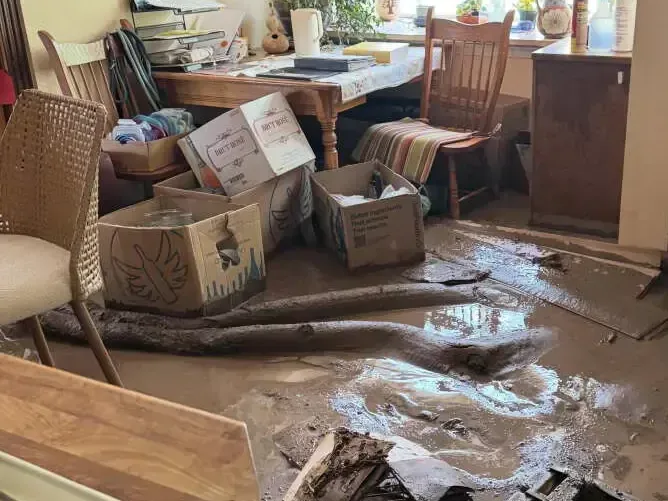
Pocket-Greenhaven fills a semicircular bend of the Sacramento River, and that shape explains why owners here think about river water more than most. When river or levee seep water reaches a home, the first choices decide how much of the house can be saved. This post lays out those first steps in plain order.
Key takeaways
- River and levee seep water is treated as contaminated, so people and pets stay out of the wet area until it is cleared.
- Shut off electricity to wet rooms only when it is safe to reach the panel; never stand in water to do it.
- Porous materials such as carpet pad, low drywall and insulation are the first items removed.
- Extraction comes before drying, and drying is measured with moisture meters rather than guessed.
- Photos and a written list of damaged contents should be made before anything is thrown out.
Why a river bend changes the picture
The center of the Pocket-Greenhaven bend sits slightly below sea level on fertile alluvium soil. Lake Greenhaven is a former clay pit, and the Edwards levee break caused a major flood in this part of town in 1904.
None of that means a home is flooding today. It does explain why owners here pay attention to levee seep, heavy storms and rising river stages, and why the cleanup for those events is different from a simple pipe leak.
- Greenhaven broke ground in 1961, with many homes complete by the mid-1960s.
- The Pocket filled in during a building boom in the 1980s and early 1990s.
- Florin Road and Greenhaven Drive run through the area, and the ZIP code is 95831.
Treat the water as contaminated from the start
River water carries soil, fuel residue and sewage from far upstream. Levee seep carries the same fine silt.
Neither is clean water, even when it looks clear.
Standard practice is to keep children, pets and anyone with health concerns out of the affected rooms. Wet shoes should stay at the door so the contamination does not travel to dry carpet.
- Do not wade through the water to reach outlets or appliances.
- Do not run a household vacuum on standing water.
- Do not wash contents in a kitchen sink; set them aside for the crew to sort.
- Wear boots and rubber gloves for any contact with wet surfaces.
What comes out first
Materials that soak up water and hold it are removed early, because they keep contaminated moisture against the framing long after the visible water is gone.
- Carpet and pad, since pad cannot be cleaned once river water has soaked it.
- Baseboards and the lower section of drywall, cut above the wet mark.
- Wet insulation inside exterior walls.
- Cabinet kick plates and the bottom of vanities.
- Soaked cardboard, upholstered pieces and mattresses.
Hard surfaces and framing
Tile, sealed concrete and solid framing can usually be cleaned and dried rather than torn out. The crew treats the surfaces, then dries them until meter readings return to normal.
That is why a measured plan beats a quick guess: the aim is to remove only what has to go.
Extraction before drying
Standing water is pulled out first with pumps and extraction units. Once the bulk water is gone, flood water cleanup shifts to mud, silt and surface treatment, and water extraction crews move to the remaining damp spots.
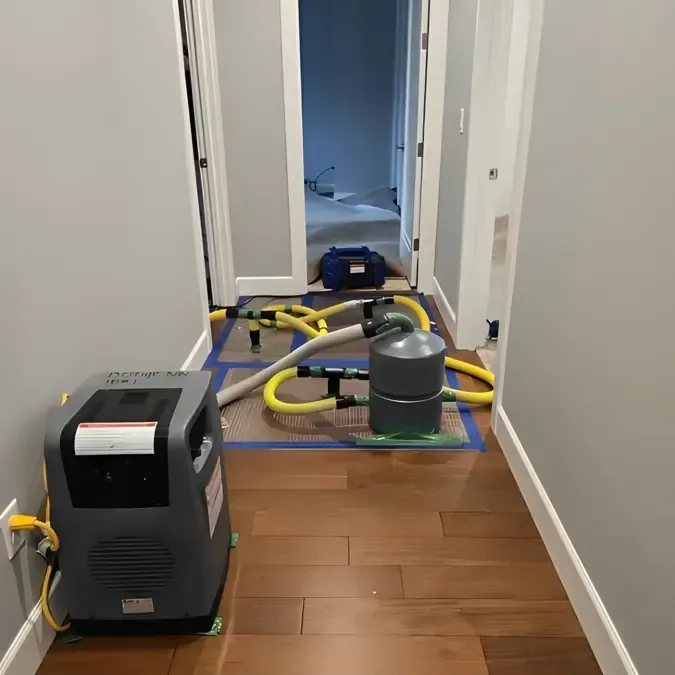
Drying only begins after the contaminated layers are out. Air movers and dehumidifiers run on a schedule, and moisture readings are logged each visit so the drying goal is clear.
Silt and fine mud
Silt works into floor seams, vent openings and the bottom of walls. It is shoveled or vacuumed with equipment made for wet debris, then surfaces are washed and treated.
Moisture readings
A thermal camera and moisture meters show wet framing that the eye misses. Those readings decide how long structural drying equipment stays in the home.
Document before anything leaves the house
A clear record helps with any insurance conversation later, and it also helps the crew decide what is salvageable. Specific policy terms vary, so this post does not describe coverage.
Take wide photos of each room, then close photos of damaged items and the high water mark on walls.
- Photograph the wet mark at several points in each room.
- List damaged contents with a short description.
- Keep samples of removed flooring or drywall until an adjuster has seen them.
- Write down the date the water was first noticed and what was shut off.
Safety checks before cleanup begins
Water and electricity do not mix, and river water can reach outlets, baseboard wiring and low appliances. Safety checks come before any cleanup work.
If a gas smell is present, leave the house and call the gas utility from outside. If the electrical panel is in a wet area, wait for an electrician or the utility to make it safe.
- Stay out of rooms where water touches outlets or cords.
- Do not use extension cords across wet floors.
- Keep sump pumps and generators outside and away from windows.
- Assume tap water is fine unless a boil notice has been issued, and check any local notice.
Mistakes that make the loss bigger
Most added damage comes from good intentions. Quick fixes can spread contamination or hide moisture.
- Pushing silt around with a mop instead of removing it.
- Turning the heat up high to dry the house, which can drive moisture into walls.
- Putting wet furniture back on damp carpet.
- Closing up wall cavities before they are checked.
- Throwing out items before they are photographed.
Heat and fans
Household fans move contaminated air, so they stay off until the crew sets up controlled drying equipment.
After drying: repairs and rebuilding
Once meters show dry framing, the rebuild can start. That includes new insulation, drywall, trim and flooring.
Homes in this area were built in several waves, from the 1960s Greenhaven homes to the later building boom, so materials and layouts differ. A scope written for the specific house avoids guesswork.
What size of job to expect
On the site's own price pages, a garage or one room of flood water cleanup is shown at $2,500 to $6,000, while a whole ground floor can run $18,000 to $35,000 or more. Those are planning ranges, not quotes.
A written scope after an on site inspection replaces the range with a real figure.
Questions
Is river water in a house the same as a pipe leak?
No. River and levee seep water is treated as contaminated because it carries silt, fuel residue and sewage. A clean supply leak is handled differently, with more materials kept in place and less disposal.
Should carpet be saved after river water?
Usually the carpet pad is removed, and the carpet itself is rarely worth keeping once contaminated water has soaked through. A crew checks the material and explains what can be cleaned.
Does Pocket-Greenhaven flood every year?
This post makes no such claim. The history on record is the 1904 Edwards levee break and the low position of the bend, which is why owners prepare. Day to day, most water losses here are ordinary plumbing and storm leaks.
What should be photographed first?
The wet mark on walls, the floor in each wet room, and any damaged contents. Photos should be taken before removal so the record shows the loss as it was.
Can a family stay in the house during cleanup?
That depends on how far the water spread and whether kitchens and bathrooms still work. Contaminated rooms are sealed off, and many families choose to stay elsewhere until drying is done.